-

-
-
Loading
Loading

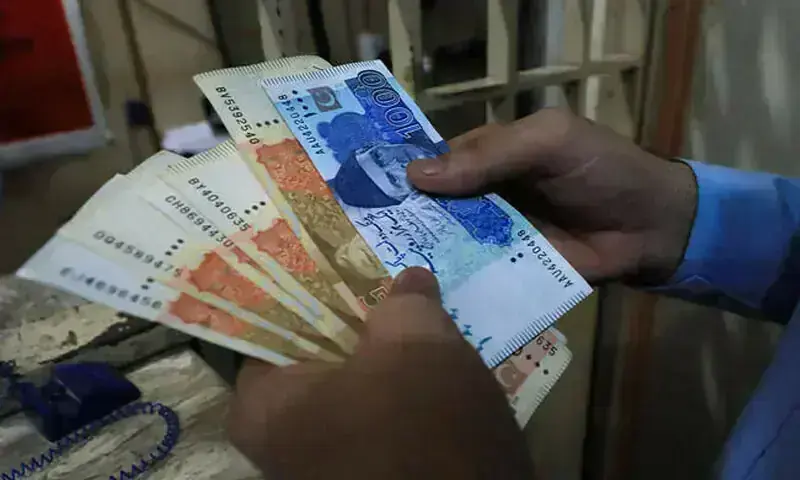

ISLAMABAD: Despite claims of austerity measures, Pakistan’s current expenditure, excluding interest payments, surged by almost 19 per cent over nine months of the current fiscal year (CFY), while national savings and energy consumption fell.
“Non-interest current expenditures grew by 18.8pc, mainly due to higher spending on defence and grants, as well as higher provincial current expenditures,” reported the Planning Commission (PC) to the Annual Plan Coordination Committee (APCC), a federal and provincial forum.
It said the total expenditure stood at Rs15.656 trillion during July-March FY26, reflecting a decline of 4.2pc over the same period of last year. It said the overall current expenditures declined by 2.2pc, whereas development expenditure increased by 26.8pc. Of this, servicing of domestic debt reduced by 25.9pc, whereas servicing of foreign debt increased by 0.6pc.
The decline in interest payments helped contain the fiscal deficit. The PC said the country’s overall fiscal performance showed considerable improvement up to the third quarter of 2025-26.
Planning Commission reports national savings dip to 14.1pc in FY26
Total revenue increased by only 10.7pc, reaching Rs14.799tr, up from Rs13.367tr collected during the corresponding period of last year. This growth was supported by an 11.3pc rise in tax revenue, driven largely by 10.1pc increase in FBR tax collection. Both direct and indirect taxes grew by 12.4pc and 7.9pc, respectively.
Non-tax revenue, on the other hand, increased by 9.5pc. Federal non-tax revenue rose by 8.2pc largely on account of one-off SBP profit transfer, petroleum levy, dividends from investments, and royalties on oil and gas. Provincial non-tax revenues reached Rs277.5bn, recording a growth of 36.7pc, mainly on account of a significant growth in profits from hydroelectricity.
The PC also reported that national savings stood at 14.1pc of GDP, compared to 14.9pc in the previous year. The target for the CFY was 14.3pc which was missed. Domestic savings were recorded at 7pc, slightly lower than 7.9pc last year. “This decline reflected higher consumption pressures in a recovering economy,” the PC said. Foreign savings shifted modestly from a negative of 0.5pc to 0.2pc, supporting the overall resource envelope.
Despite internal and external shocks, total investment remained stable at 14.4pc of GDP in 2025-26, but fell short of the 14.7pc target.
The PC reported a 10.6pc contraction in energy output during CFY, and this contraction was broad-based across the electricity, gas, and water supply sectors. This was attributed to the high base effect after an exceptional 29.6pc growth last year.
It said the natural gas supply dropped by 2.6pc while crude oil output fell 0.3pc, and the sector was still facing challenges in mineral extraction and exploration. Another contributing factor was the reduction in budgeted subsidies to Rs893 billion, compared to Rs1.19tr in the previous year. The modest growth in the output of Wapda and related companies and a relatively low sectoral deflator also weighed on the sector’s nominal growth, the PC said.
Published in Dawn, June 3rd, 2026
if you want to get more information about this news then click on below link
More Detail