-

-
-
Loading
Loading

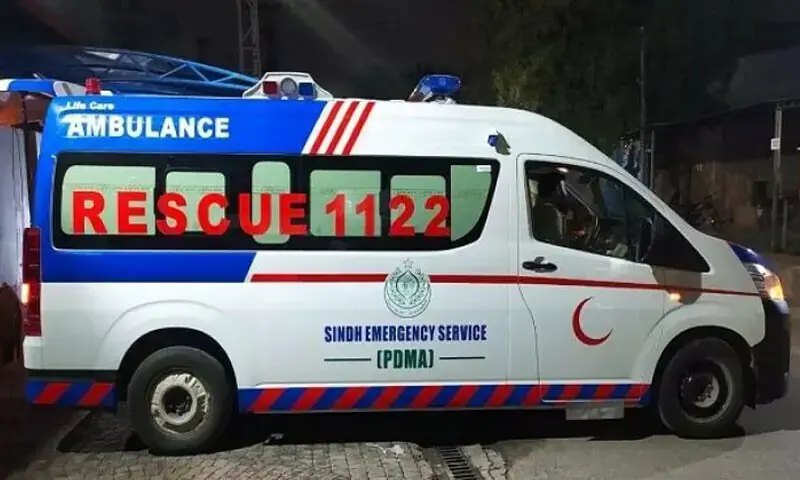

KARACHI: The Sindh government on Monday informed the Gul Plaza Judicial Commission that the operational responsibility for conducting and executing rescue operations during emergency incidents vests in the Sindh Emergency Rescue Services (SERS), commonly known as Rescue 1122, and not in the respective local or district government.
According to the legal opinion formed by the office of the advocate general (AG) Sindh, city and district governments may extend logistical and infrastructural support, and such functions were ancillary and coordinative in character and did not confer primary operational command or statutory responsibility for rescue operations after the enactment of the Sindh Rescue Service Act, 2023.
Regarding governance and oversight, it maintained that the rescue service operated under the administrative control of the Sindh Emergency Council, which functions as a regulatory and policy-making authority to ensure an effective, efficient and expeditious response during emergencies.
It is pertinent to mention that, under the law, the minister or adviser or special assistant for the rehabilitation department, Sindh, and the provincial minister for health serve as the chairperson and co-chairperson of the Sindh Emergency Council, respectively, while the secretaries of the rehabilitation, home, health and local government departments, the director general (DG) of the Provincial Disaster Management Authority, the deputy inspector general of police (security), and two representatives — one each from government hospitals and non-governmental organisations to be nominated by the chief minister — serve as members of the council.
Local bodies may provide logistical support to SERS under 2023 law, says advocate general
The law further states that the mayor of the affected city, the chief executive officer of the Sindh Integrated Emergency and Health Services and the DG of Rescue 1122 are also included as co-opted members.
The single-member commission, headed by Justice Agha Faisal of the Sindh High Court, tasked with probing the devastating blaze, had sought an opinion from the law department on whether the provincial government or the respective city/district government bore operational responsibility for carrying out rescue operations during such incidents.
Subsequently, the law department referred the matter to the office of the AG Sindh, which furnished its opinion, and the same was placed before the commission for further necessary action.
The AG office, in its opinion, said that the Sindh Rescue Service Act, 2023, established a province-wide statutory emergency response mechanism and constituted a provincial service as a body empowered to operate throughout the province to perform rescue and emergency functions.
It also noted that the operational chain of command flowed from the council through the DG Rescue 1122 to district-level formations and district offices operated as field units of the provincial service and the statutory scheme demonstrated a from the council through the DG Rescue 1122 to district-level formations and district offices operated as field units of the provincial service and the statutory scheme demonstrated a centralised operational and administrative structure controlled by the council.
It further observed that district-level rescue formations did not operate as autonomous entities under the control of the respective district administrations and rather they function as subordinate units within the centralised provincial command structure established under the law.
“Consequently, notwithstanding the fact that rescue operations are physically carried out within the territorial limits of a particular district, the ultimate operational responsibility and command authority remain vested in the competent provincial authority constituted under the Act,” it added.
The AG office maintained that city and district governments may, in appropriate circumstances, extend logistical and infrastructural support, coordinate through the local civil administration, facilitate access to municipal resources and assist in broader disaster management efforts, but such functions were ancillary and coordinative in character and did not confer or amount to primary operational command or statutory responsibility for rescue operations once the Sindh Rescue Service Act, 2023 is invoked and set into motion.
In view of the foregoing, it concluded that the Sindh Rescue Service Act 2023, being a subsequent and special enactment, establishes a centralised and province-wide statutory mechanism for the organisation, control and execution of rescue and emergency operations within the province.
It also said: “The Act expressly vests administrative authority, policy oversight, financial control, appointment powers and operational command in the statutory body constituted thereunder, acting through the Sindh Emergency Council and the Director General”.
“Accordingly, it is the considered and reasoned opinion that, under the prevailing laws of the Province of Sindh, the operational responsibility for the conduct and execution of rescue operations during emergency incidents vests in the Emergency Rescue Service constituted under the statutory framework of the Act, 2023, and not in the respective city or district government. This conclusion is, however, subject to the harmonious application of other laws for the time being in force, as expressly preserved under Section-34 of the Act, 2023”, it concluded.
Published in Dawn, March 10th, 2026
if you want to get more information about this news then click on below link
More Detail