-

-
-
Loading
Loading

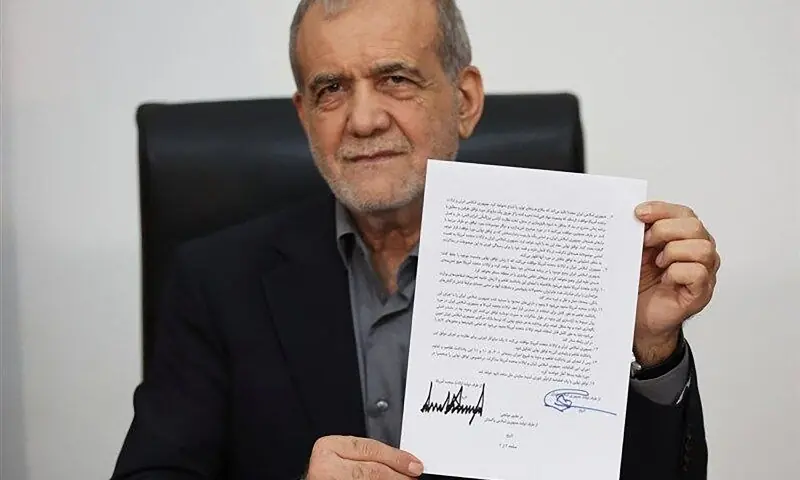

ISLAMABAD: The announcement of the US-Iran peace deal came after talks nearly collapsed several times, including on the final night.
Two sources and a diplomat briefed on the negotiations said securing the framework deal required Qatar to step in.
Disagreements sometimes came down to single words, such as a 45-minute debate in late May on whether the text should use “etc.” or “including”, the diplomat said, without describing which clause the debate referred to.
Achieving a final settlement on issues including sanctions relief and management of the strait as well as restrictions on Iran’s nuclear programme – all while Washington and Tehran distrust each other’s intentions – could prove even more challenging.
Trump’s shifting public statements repeatedly complicated the effort
“Washington and Tehran appear to have different interpretations of the same text,” said Alex Vatanka of the Middle East Institute.
“Iran will try to turn ambiguity into leverage, while the US will try to preserve pressure until nuclear concessions are secured. Mediation will therefore remain central, but difficult.”
Soon after the first round of talks in early April, the US blockade of Iranian ports in the Strait of Hormuz became one of the sharpest disputes, while at the end of May a call by President Donald Trump for Iran and Pakistan to join the Abraham Accords and normalise relations with Israel also disrupted negotiations, Pakistani sources said.
One of the sources said the arrival of a Qatari delegation in Tehran at the same time as a Pakistani team in early June was a key moment, as Doha was able to provide financial assurances to the Iranian leadership.
Doha had been reluctant to formally enter the process, the diplomat said, but that changed in mid-May after talks had stalled for about 10 days.
Qatar agreed to become more directly involved only if a ceasefire held and it was not attacked, the diplomat said. Its team then made five discreet trips to Tehran, often via Turkiye, to work through gaps in Pakistani drafts.
On May 19, after leaving Tehran with what they believed was a positive opening, the Qatari team flew to Washington, met senior US officials and made edits to the text while calling Iranian counterparts from inside the White House, the source said.
One of the Pakistani sources, who was involved in the negotiations, said the final night showed how perilous the process remained up to the end.
By around 11pm on Sunday in Pakistan, with officials gathered at the prime minister’s house and in a situation room, the talks were again falling apart after Israel attacked Lebanon, the source said.
“Things were very fluid,” the source said, adding that army chief Field Marshal Asim Munir passed messages between the two sides through the night. Hours later, the agreement came through.
An international source familiar with the negotiations said the Iranians were very careful about information security. “Messages get passed through many hands, and then come back days later,” they said.
The Pakistani source involved in the negotiations said things improved after a representative of Supreme Leader Ayatollah Mojtaba Khamenei came to Islamabad, allowing Munir and his team to “get more direct communications running.”
The international source said Pakistan grew frustrated with the differing communication styles. “With the Americans, you never really knew what their position was, and it could change. And with the Iranians, you often didn’t get a clear answer for days and days,” the source said.
Published in Dawn, June 19th, 2026
if you want to get more information about this news then click on below link
More Detail