-

-
-
Loading
Loading

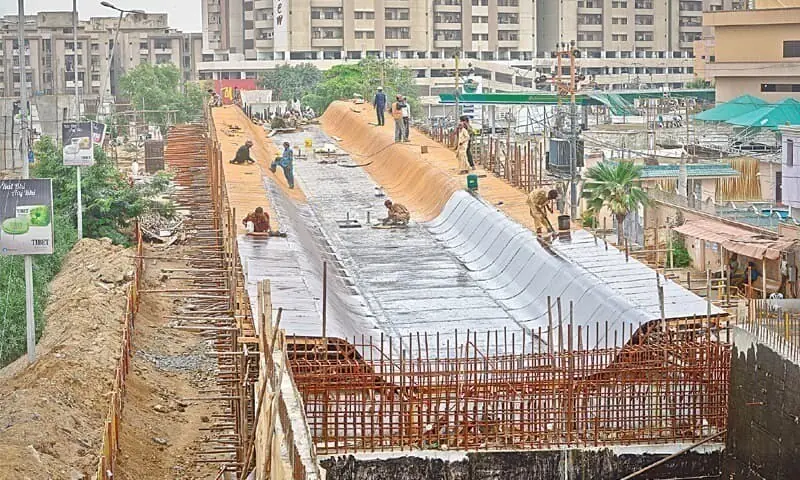

• Zameer Abbasi was arrested in Lahore on June 22, IO tells judge
• Defence claims suspect was picked up by unidentified persons on June 11
KARACHI: A bureaucrat, who had been on the run for the past many weeks, has finally been arrested in Lahore, brought to Karachi and remanded in Anti-Corruption Establishment (ACE) custody for five days in connection with a case pertaining to alleged corruption of Rs8.5 billion in the Bus Rapid Transit (BRT) Yellow Line construction.
Zameer Abbasi, a grade-19 officer of the Sindh government and former project director of Karachi Mobility Project under which Yellow Line is being constructed, has been booked and arrested for his alleged involvement in advance payment of Rs8.5bn to contactors.
On Tuesday, he was produced before Additional District and Sessions Judge (South) Muhammad Aslam Shaikh, who is the judge in charge Special Anti-Corruption (Provincial) Court, by the investigating officer of the case.
The IO informed the court that the suspect had been apprehended in Lahore on June 22. He requested the court to grant the suspect’s physical custody for further interrogation.
He also submitted the report of an inquiry committee, which had identified serious financial irregularities in the Yellow Line project.
The inquiry committee report stated that Abbasi and then director procurement Jhaman Dad made Rs8.5bn advance payments to contractors without bank guarantees despite the fact that their contracts lacked any specific clause regarding “advance payment and financial assistance to the contractors”.
On the other hand, suspect’s defence team informed the court that his family had filed multiple applications and petitions in courts informing the authorities that he was picked up by unidentified persons in Lahore on June 11.
The defence argued that the chief minister’s inquiry report had no legal scope at this stage and could only be used to initiate an investigation. They contended that the FIR could be registered after the investigation and approval from the competent authority as per anti-corruption laws.
The defence also highlighted that the suspect’s father had registered an FIR in Lahore on June 12 regarding his alleged kidnapping.
The counsel further requested the court to discharge the suspect under Section 63 of the criminal procedure code (CrPC).
State prosecutor Talib Ali Memon submitted that if the suspect was found innocent during investigations, he would be discharged from the case.
While standing in the witness box, the suspect informed the court that he had been held in illegal detention for 11 to 12 days. He maintained that not a single document in the case had been tampered with, forged or fabricated.
Referring to the allegations related to advance payments made in 2025, he stated that the work for which the material advance payments had been issued had already been completed.
He said that had there been any intention to receive “kickbacks”, the payments would have been deliberately delayed.
After hearing the state prosecutor and the defence, the court remanded the suspect in ACE custody for five days and directed the IO to produce him on June 27 along with a progress report.
In the detail order, the judge observed: “No doubt arguments of learned respective counsel for the accused is based on documentary evidence but the irregularities in the arrest enquiry proceedings and grounds of registration of FIR and filing of petitions requires deeper appreciation but at this stage it is an admitted fact that accused is nominated in FIR and as per the record produced by the IO in shape of enquiry report and relevant documents he is required for further investigation.”
A case was registered on behalf of the state under Sections 409 (criminal breach of trust by public servant, or by banker, merchant or agent), 420 (cheating and dishonestly inducing delivery of property), 467 (forgery) 468 (forgery for purpose of cheating), 471 (using as genuine a forged document), 477-A (falsification of accounts) and 34 (common intentions) of the Pakistan Penal Code read with Section 5 (2) of the Prevention of Corruption Act, 1947.
Published in Dawn, June 24th, 2026
if you want to get more information about this news then click on below link
More Detail