-

-
-
Loading
Loading

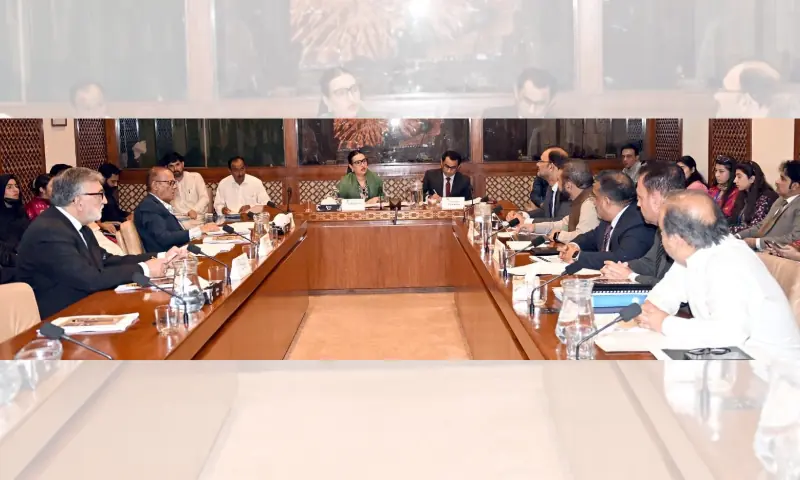

ISLAMABAD: A Senate panel on Tuesday stated that private schools, despite their legal and social responsibility, were reluctant to provide free education to 10pc deserving students, which was a matter of concern.
The Senate Standing Committee on Federal Education and Professional Training met with Senator Bushra Anjum Butt in the chair.
It is relevant to note that recently the Islamabad High Court’s Justice Raja Inaam Ameen Minhas, while hearing a case, directed the Private Educational Institutions Regulatory Authority (Peira) to ensure implementation of its rules and regulations about the 10pc quota. Reportedly, private schools have been pocketing billions of rupees annually by failing to implement the mandatory 10pc scholarship quota for deserving students.
During the course of meeting, the Senate committee was informed about the status of accommodating 10pc poor students under the free education policy in private schools.
Association of private schools moved high court, given interim relief, meeting informed
The committee was informed that Association of Private Schools had approached the high court, which had granted interim relief by suspending the implementation of the decision.
Expressing dissatisfaction, the chairperson observed that private schools were reluctant to accommodate underprivileged children despite their legal and social responsibility to do so. She remarked that Pakistan had been grappling with the issue of out-of-school children for decades, but many private schools were not complying with the government’s policy on providing free education to deserving students. She said that strict implementation of the policy was essential to ensure that every child had access to quality education.
Meanwhile, the committee received a briefing from the Inter-Board Coordination Commission (IBCC) on the alleged paper leakage in the Cambridge A-Level examinations. The affected students appeared before the committee and presented their concerns. The IBCC informed the committee that it had shared the available evidence with Cambridge Assessment and the National Cyber Crime Investigation Agency (NCCIA) for investigation and appropriate action.
Expressing serious concern over the matter, the chairperson said that the issue should be resolved on a priority basis to prevent any further loss of time and academic uncertainty for the affected students. She directed that letters be issued to the relevant authorities, urging them to expedite the investigation and ensure that the matter is resolved before July 21.
Similarly, the committee was briefed on the issue of degree attestation for graduates of unauthorised campuses of PIMSAT, the University of South Asia, Lahore, and NICE Karachi.
The Higher Education Commission (HEC) representatives informed the committee that, out of approximately 6,000 affected students, the cases of 4,383 had been approved for consideration for degree attestation.
The committee also deliberated on the long-pending issue of non-attestation of degrees awarded by Al-Khair University. It was also informed that the commission had planned to conduct a test for the students before verifying their degrees; however, the test has yet to be conducted.
The committee recommended that HEC resolve the matter by adopting the policy previously applied in the case of Global University, Lahore, and submit a report to the committee within 10 to 15 days. The HEC also briefed the committee on its plagiarism policy.
Meanwhile, the committee was told that upon its recommendations a pool of writers had been formed to facilitate in writing visually impaired students during the board examination.
The committee also discussed the registration criteria and infrastructure standards for private educational institutions.
Senator Syed Masroor Ahsan inquired about the prescribed building standards for schools and questioned whether every school was required to provide essential facilities such as playgrounds and libraries. The committee was informed that not all schools currently have playgrounds and laboratories.
Chairperson Anjum Butt observed that many private schools were operating in residential houses and emphasised the need to review the existing registration criteria for them. She added that despite charging substantial tuition fees, many private schools failed to provide adequate educational and recreational facilities to their students.
Published in Dawn, July 15th, 2026
if you want to get more information about this news then click on below link
More Detail