-

-
-
Loading
Loading

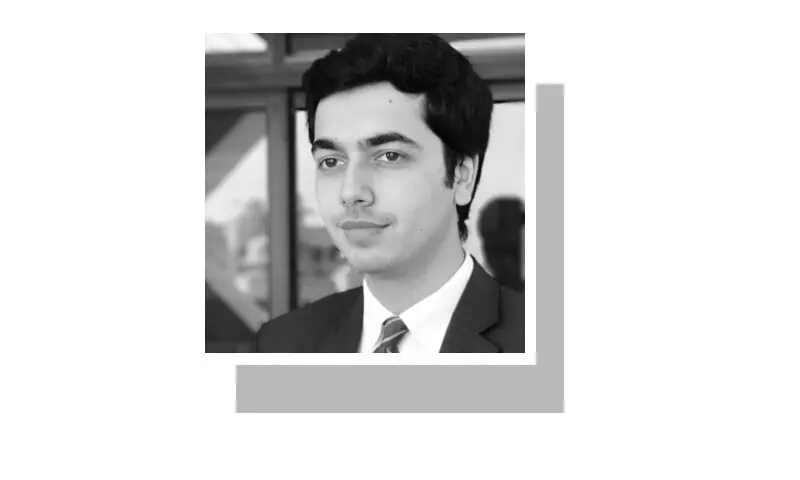

THE first time they arrested Aasiya Andrabi, her baby was kept away from her for a year. He was left to play with a stone, banging it on the door the whole day. “That stone was his toy,” she remembered. But that was a long time ago. More recently, she has been sentenced to life by an Indian special court. Three life sentences. This is not because of anything Ms Andrabi, a 64-year-old grandmother, has done. This is because she is Kashmiri, and because she refuses to accept the terms of her oppression.
Ms Andrabi has spent more time in Indian prison than outside it. Her latest sentence, she says, proves her a true soulmate to her husband, Dr Muhammad Qasim Faktoo, occupied Kashmir’s longest-serving political prisoner — himself bereft of his liberty for 33 years. His shareek-i-hayat, meanwhile, has won laurels of her own: she is the first Kashmiri woman to have her struggle for self-determination met with a life sentence.
Resistance has come easy to Ms Andrabi, even in the face of local tradition: she refused to wed within caste (“We demand freedom from Indian rule. But Kashmiris are slaves of their own bogus customs.”) Instead, she married someone likeminded; years of peril followed. She had a similar Damascus moment with her education: Ms Andrabi insisted on getting her postgrad from Himachal Pradesh’s Dalhousie, back when women were rarely permitted to go outside Kashmir. Her family refused, but this failed to extinguish her: a chance encounter with Khawateen Ki Dilon Ki Baatein,by conservative author Mayal Khairabadi, helped forge her path.
Dukhtaran-i-Millat was the answer, a sisterhood with faith at its core and liberation its end. In time, Ms Andrabi’s story became one with the story of Kashmir, in all its cruelty and violence, its unbroken hope. She mobilised women after the martyrdom of Burhan Wani; she set up rehab centres for families ravaged by occupation; she looked on as her prison in Jammu was converted into a temple, her lungs deliberately destroyed by incense smoke.
Resistance has come easy to Aasiya Andrabi.
That last bit occurred in 2009, which might jar against the Pakistani liberal’s history: rolling massacres in Hyderabad and barbed-wire siege in Kashmir seem morally beyond gentle Nehruvians, then or since. And yet, occupation is a bipartisan business: it needs no Modi or Yogi to spur it along.
With the Hindutva project in full swing now, however, even the old hypocrisy has faded. Judge Chander Jit Singh, the Delhi kangaroo that sentenced Ms Andrabi last month, was clear that “no violent incidence in particular” had “been brought on record”. Yet even as the charge of waging war was found empty, the court convicted her of a string of lesser offences.
To read the court’s reasoning, as this writer has, it’s clear that freedom is a thought crime. How else could the court acknowledge the absence of violence yet impose its maximum penalty? Or rely on extraneous, unproven reports and not a single mitigating factor (age, health, eight years already served)? Ms Andrabi and her associates, Sofi Fehmeeda and Nahida Nasreen, showed no remorse, the court said. That they said they were “proud of what they were doing and also that they will continue to do their work” was enough.
Because the Dukhtaran-i-Millat believed, the court observed, that “Jammu and Kashmir has never been part of India”. It hasn’t. It never will be.
Ms Andrabi’s case is not the first. Freedom fighter Yasin Malik was handed down a life sentence in 2022. Ever since Hindutva’s sectarians moved from occupation to annexation in Kashmir in 2019, stripping the vale of Article 370, Lebensraum has carried on. Detention without trial; curricula scrubbed; 80,000 Indians receiving residency certificates: Delhi’s legal project has gone hand in hand with a grimy reordering of demographics in Kashmir.
Which makes it high time the UN’s Human Rights Council move ahead, as per the findings of its High Commissioner for Human Rights, and establish a commission of inquiry into mass violations — one of its highest-level probes, mandated for war zones. The ethnic cleansing of Jammu isn’t too distant a memory.
And high time the Kashmiri cause for self-determination return to the fore of the global stage, with Pakistan its loudest voice. That can only happen with sustained attention, with the avoidance of hideous own-goals at home a bonus: worsening repression and disastrous amendments — the recent Mickey Mouse sentence handed down to Imaan Mazari and Hadi Chattha for random tweets — a sterling case in point.
Aasiya Andrabi is Kashmir’s conscience; her life committed to nothing less than the liberation of her people. Every freedom-loving human being must know her name; every second of her imprisonment proof of a murderous, flailing occupation. The work continues.
The writer is an advocate of the Supreme Court.
Published in Dawn, April 5th, 2026
if you want to get more information about this news then click on below link
More Detail