-

-
-
Loading
Loading


ASK any banker in the country to name the single largest untapped commercial opportunity on their balance sheet, and the honest answer will not include corporates, nor consumers, not even mortgages. It is the roughly five million small and medium enterprises (SMEs) that are ostensibly bankable but sit almost entirely outside the formal credit system today.
Ask the same banker why these have not been pursued, and the answer becomes more revealing: a mixture of risk language, regulatory caveats and a quiet acknowledgement that the sector is, in some fundamental way, simply too hard to read.
That difficulty lies at the heart of the matter, and it deserves to be stated plainly rather than being dressed up in the vocabulary of risk.
SMEs generate close to 40 per cent of GDP, 25pc of exports and around 80pc of non-agricultural employment. Yet by December 2025, only 302,922 of them were formally banked. The South Asian average for firms reporting access to a bank loan sits above 31pc; Pakistan’s figure is a dismal 2.1pc.
The very conditions that would make an SME bankable are those that it cannot afford to meet — precisely because it is not bankable.
The cost of exclusion is concrete. An SME that is locked out of formal credit borrows, if at all, from informal sources at 30pc to 60pc per annum. At those rates, no enterprise modernises machinery, builds working capital cushions, or invests in compliance. The very conditions that would make an SME bankable are those that it cannot afford to meet — precisely because it is not bankable.
It is tempting to attribute this to risk aversion in the banking system. But this would be wrong. Pakistani banks are not unusually conservative by global standards — they are unusually starved of information. The median SME operates on cash, holds no audited statements, files no returns, and records sales in ledgers that no credible auditor will certify. A bank cannot underwrite what it cannot see. The problem is not that SME risk is high; it is that SME risk is invisible, making risk-pricing prohibitive, much as is the case with agriculture.
This framing matters because it points to the actual solution. The question is not how to make banks braver. It is how to make the borrowers visible.
That work has begun, and the early numbers are genuinely encouraging. Outstanding SME financing grew from Rs457 billion at the FY23 trough to Rs882bn by December 2025 — nearly doubling in slightly over two years — with the State Bank targeting Rs1.5 trillion by 2028. The proof of concept sits closer to home than most realise. Punjab’s Asaan Karobar Scheme, launched in January 2025 on a hybrid risk-absorption formula — a first-loss guarantee from the federal government and an interest-rate subsidy from the Punjab government — with digital architecture stitching together CNIC, FBR, credit bureau and bank data, has already disbursed funds to over 110,000 SMEs, half of them from low-income groups, and more than a third of the total industry borrowers.
The opportunity is being widened further by the industry’s Islamic conversion. For SMEs, where religious considerations weigh heavily, Sharia-compliant products are not a parallel track; they are a primary channel.
But progress must be honest about its constraints. As of 2025, only 38pc of banking assets are deployed in private sector lending, while banks bear an effective tax rate of 54.1pc — the highest in the region, against 30pc or less in India, Malaysia and Vietnam. Until that incentive structure shifts, no amount of regulatory exhortation will redirect capital at scale.
Yet the macro tailwinds are real. The policy rate has been cut by more than 1,000 bps from its 22pc peak. Fiscal consolidation has produced a primary surplus of 3pc of GDP. Moody’s, Fitch and S&P have all upgraded Pakistan. This is the most favourable backdrop for priority sector credit in over a decade — and converting it rests on five policy actions.
First, formalisation must be reframed not as exposure to punitive taxation but as access to affordable capital. The federal government should announce a time-bound SME documentation roadmap linked to incentives for first-time borrowers. Incremental lending to priority sectors should receive targeted tax incentives: a reduced tax rate on income generated from first-time SME borrowers would materially improve risk-adjusted returns for banks.
Second, risk-sharing mechanisms must expand rapidly. Sustained fiscal allocation for first-loss guarantees can crowd in priority sector lending at multiples of public investment.
Third, the Financial Data Exchange must be operationalised. Integrating Nadra, tax, banking and payment system data would fundamentally improve credit scoring and underwriting capability.
Fourth, the upcoming budget should make adequate provisioning for venture capital and private equity funding through front-loaded government contributions that absorb early losses, and rationalise tax structures on investment vehicles — at a fiscal cost smaller than a single year of circular debt accumulation.
Fifth, the Alternative Dispute Resolution mechanism must be made effective by ensuring that no stay orders are granted without the full deposit of the disputed amount, so that prolonged litigation cannot be used to delay the matter’s resolution.
An estimated 5m enterprises sit on the other side of a documentation barrier that we now have the technology to remove. The window, which was opened by lower rates, fiscal repair, a reforming legal system and digital readiness, will not stay open forever. It must be used, and used immediately.
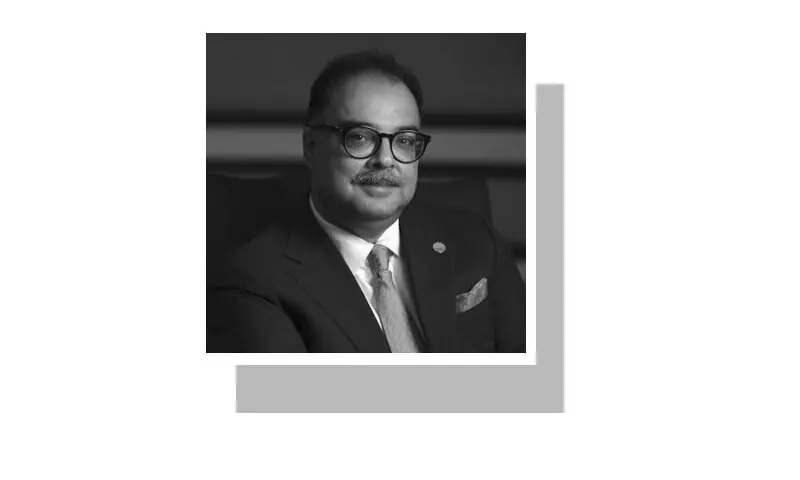
The writer is chairman of the Pakistan Banks’ Association.
Published in Dawn, May 23rd, 2026
if you want to get more information about this news then click on below link
More Detail