-

-
-
Loading
Loading


MAZHAR Hussain was sentenced to death in 1997. He spent 17 years in prison before he died of a heart attack in custody. Two years after his death, the Supreme Court acquitted him as innocent.
Muhammad Iqbal was arrested at 17. He spent 21 years in prison before the courts realised that he had been a child at the time of the offence and released him. While Iqbal waited in jail, Pakistan saw six prime ministers come and go, Facebook was invented. Smartphones changed the world. An entire generation of Pakistanis was born, grew up and became adults. When justice arrives after 21 years, can we still call it justice?
Mazhar Hussain and Muhammad Iqbal are not isolated cases. Countless prisoners throughout the country face delayed justice — often when it is too late. The reason is simple. Pakistan’s prisons system is overburdened and overpopulated. Our prisons house more than 113,000 people against a capacity for fewer than 69,000. New punitive laws passed regularly further fuel the rate of incarceration in the country.
Most importantly, approximately three out of every four prisoners has not been convicted for any crime. They are waiting for justice: for an investigation to finish, or bail, or to be produced before a court. Pretrial detention should be the exception — but in Pakistan, it is the default response. Pakistan’s prison debate treats overcrowding as an engineering problem. The fixes follow this logic: more barracks, digitised records, trained staff, repaired hospitals. Much of this is needed but it misses where the crowding comes from. A prison population is built by decisions made long before anyone reaches a cell; for starters, new punitive laws that widen what counts as an offence and how harshly it is punished — from narcotics to public order. And with too many arrests that could have been mere warnings, and remands and further remands, which are now routine procedure. Bail is granted on paper but denied in practice simply because the accused can’t arrange surety.
When justice arrives after 21 years, can we still call it justice?
Drug cases show this acutely. Many prisoners held under the narcotics law are there for possession or low-level possession. Conviction rates remain dismally low — around three per cent to 5pc. Yet the 2022 amendments to the Control of Narcotic Substances Act restricts parole, probation and remission for drug offences, closing off tools that might have kept people with addiction out of prison. A person struggling with addiction is jailed, not treated.
The criminalisation of poverty impacts overcrowding just as reliably. Bail exists on paper but liberty depends on cash, paperwork and a bank balance. A person accused of a minor offence can stay in jail simply because he can’t afford to leave.
Children make this most visible. The Juvenile Justice System Act guarantees legal representation and diversion, but children still enter jails without a lawyer. In practice, hardly a single case of diversion has actually gone through. At Adiala, we found that of 82 juvenile prisoners, 79 were under trial and 29 had no legal representation.
Delay lies underneath all of this. Each adjournment looks routine in a case file. For someone inside, it is another day added to a sentence that hasn’t been handed down. None of this gets fixed by better prison management alone. We need bail reform, scrutiny of remand decisions, legal aid that reaches people early. Courts could review long-pending under-trial cases from inside prisons, prioritising children, women and persons with disabilities.
All this is not to say that conditions inside prisons do not need attention. Overcrowding worsens heat, disease, sanitation and violence and makes abuse easier to hide. The National Commission on Human Rights’ work on torture shows the need for complaint mechanisms that are independent and capable of producing consequences. Pakistan’s prison rules should also match the Mandela Rules and Bangkok Rules: healthcare, sanitation, legal access, family contact and protection from violence are the baseline of lawful custody.
There is a genuine opening now. The Law and Justice Commission has brought the judiciary, provincial governments, prison departments and human rights institutions into one conversation on prison reform. That is only useful if it changes what the system does; not just what it says. Reform will only ring true when no Pakistani has to wait 17 years to be declared innocent and no child becomes a middle-aged man before the justice system recognises his rights.
We cannot give back to Mazhar Hussain the life he lost during 17 years in custody. We cannot return Muhammad Iqbal the youth that was taken from him. But if we can ensure that their stories are not repeated, that would be reform indeed.
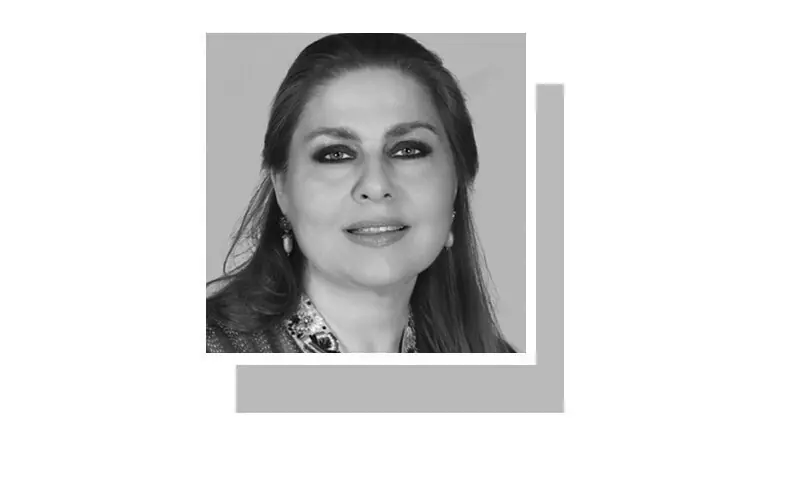
The writer is the chairperson of the National Commission for Human Rights.
Published in Dawn, July 14th, 2026
if you want to get more information about this news then click on below link
More Detail