-

-
-
Loading
Loading

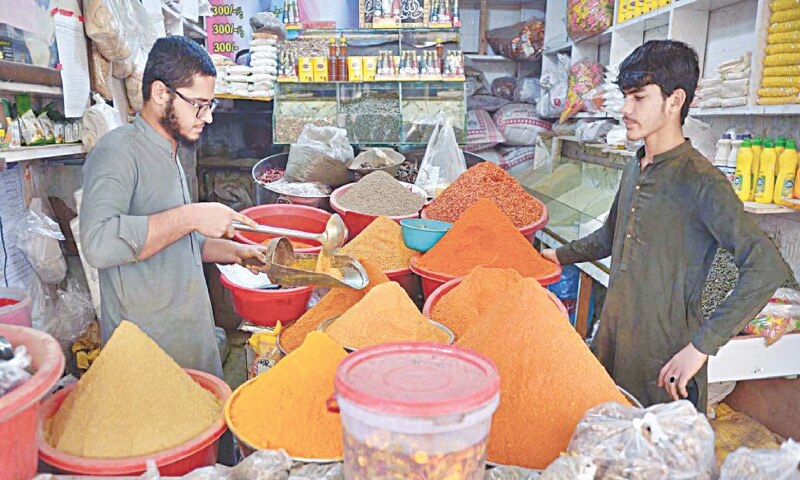

ISLAMABAD: Short-term inflation, measured through the Sensitive Price Index (SPI), rose 5.19 per cent year-on-year in the week ending Feb 19, reflecting higher retail prices of perishable food items and energy products in the domestic market.
The SPI-based inflation has now increased for 29 consecutive weeks, underscoring persistent pressure on household budgets. The continued upward movement has largely been driven by a sharp rise in the prices of vegetables and other perishables, as well as higher electricity and petrol rates. On a week-on-week basis, the SPI edged up by 1.16pc from the previous week, official data showed on Friday.
The increase was attributed mainly to stronger demand for essential food items during the month of Ramazan, which traditionally leads to higher consumption and short-term price pressures.
The latest figures suggest that food and energy remain the principal contributors to inflationary trends, with perishable goods particularly sensitive to supply constraints and seasonal demand patterns.
SPI rises 5.19pc year-on-year, driven by higher food and energy prices
An extraordinary surge in the retail prices of sugar and meat has also played a decisive role in reversing the easing trend witnessed in recent weeks. Meat prices, in particular, have been climbing steadily, adding further strain on household budgets already under pressure from elevated food and energy costs.
Weekly inflation had earlier reached a historic high of 48.35 per cent YoY in early May 2023. It subsequently moderated in the following years. The latest movement in sugar, edible oil, pulses, and meat prices suggests that volatility in essential food commodities continues to shape short-term inflation trends, with consumers facing recurring cycles of price spikes.
The items, whose prices increased the most over the previous week included bananas (16.05pc), electricity charges for Q1 (15.41pc), garlic (5.86pc), chicken (5.49pc), onions (3.83pc), tomatoes (3.82pc), diesel (2.69pc), petrol (1.93pc), beef (1.03pc), LPG (0.75pc), mutton (0.69pc) and long cloth (0.28pc).
The items whose prices saw a decline week-on-week included eggs (11.78pc), potatoes (2.24pc), wheat flour (2.02pc), pulse masoor (1.47pc), sugar (0.96pc), vegetable ghee 2.5Kg (0.72pc), pulse gram (0.58pc), cooking oil 5 litre (0.19pc), gur (0.16pc), vegetable ghee 1kg (0.11pc), rice IRRI-6/9 (0.08pc) and mustard oil (0.07pc).
However, on an annual basis, the items whose prices increased the most tomatoes (85.20pc), wheat flour (31.33pc), gas charges for Q1 (29.85pc), electricity charges for Q1 (17.33pc), bananas (15.83pc), chilies powder (15.20pc), beef (13.28pc), LPG (12.22pc), firewood (11.40pc), powdered milk (9.89pc), shirting (9.11pc), mutton (8.77pc) and gur (8.63pc).
In contrast, the prices of potatoes dropped 45.43pc, followed by garlic (27.51pc), pulse gram (23.30pc), chicken (19.36pc), onions (18.10pc), Lipton tea (13.95pc), salt powder (12.52pc), pulse masoor (12.33pc), eggs (8.54pc), pulse mash (5.08pc), mustard oil (2.13pc), sugar (1.43pc) and pulse moong (1.40pc).
The index, comprising 51 items collected from 50 markets in 17 cities, is computed weekly to assess the prices of essential commodities and services at shorter intervals. Data showed that the prices of 17 items increased, 12 decreased, and 22 remained stable compared to the previous week.
Published in Dawn, February 21st, 2026
if you want to get more information about this news then click on below link
More Detail