-

-
-
Loading
Loading

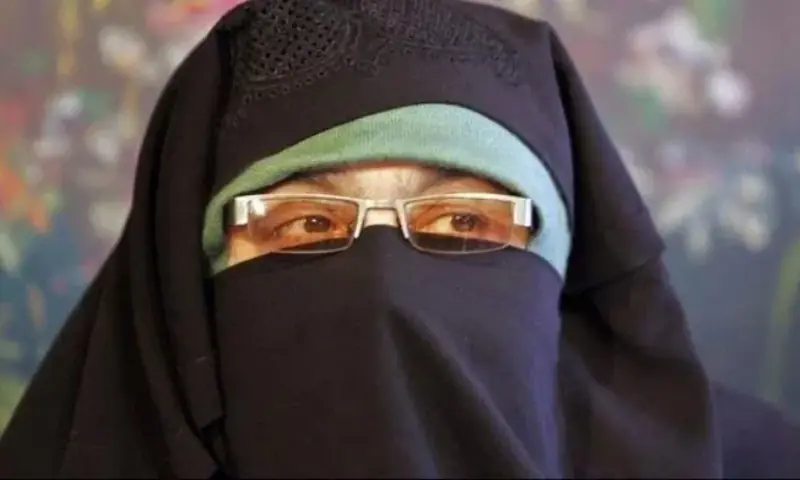

MUZAFFARABAD: Azad Jammu and Kashmir (AJK) Prime Minister Raja Faisal Mumtaz Rathore on Tuesday strongly condemned the sentencing of three women activists by an Indian court, terming the verdict a manifestation of “political coercion” aimed at silencing dissent in India-occupied Jammu and Kashmir.
In a social media post on X, Rathore denounced the life imprisonment awarded to Kashmiri leader Asiya Andrabi, along with 30-year sentences handed down to her associates Fehmida Sofi and Nahida Nasreen by a special court of India’s National Investigation Agency (NIA) in New Delhi.
“These verdicts are not about justice; they are instruments of political coercion designed to criminalise dissent and suppress the legitimate voice of the Kashmiri people,” he said, adding that targeting women for their political beliefs laid bare the “deep bias” in the system.
Andrabi is the founder of a Kashmiri rights group called the Dukhtaran-i-Millat, or Daughters of the Nation.
The court sentenced her, Fehmeeda and Nasreen under the Indian Unlawful Activities (Prevention) Act (UAPA).
Additional Sessions Judge Chander Jit Singh of the specially designated NIA Court handed down the sentences after hearing arguments about the quantum of punishment.
Government prosecutors alleged that Andrabi was involved in a conspiracy to carry out militant activities.
The three were convicted on January 14, 2026, under various provisions of the anti-terror law and the Indian Penal Code, including “charges of conspiracy to commit terrorist acts and waging war against the state”.
They were the only accused in the case and were convicted together, making Tuesday’s order the first sentencing ruling in the matter.
The AJK premier said the decision reflected a broader pattern in which peaceful political expression in the occupied territory was being met with punitive measures. “This is not the rule of law; it is the systematic criminalisation of a legitimate political struggle for the internationally recognised right to self-determination,” Rathore said.
He urged the United Nations and international human rights organisations to take immediate notice of the development and play their role in ensuring the release of Kashmiri political prisoners.
“The people of occupied Jammu and Kashmir cannot be subdued through intimidation. Their resolve for freedom, justice and dignity will endure,” he added.
Meanwhile, Uzair Ahmed Ghazali, a leader representing the post-1989 migrants from occupied Jammu and Kashmir, also denounced the verdict, describing it as a stark example of injustice and politically motivated retribution.
Ghazali, who heads Pasban-e-Hurriyat Jammu and Kashmir (PHJK), said the penalties imposed on the three activists violated established human rights norms and reflected a policy of coercion over dialogue.
“The only ‘offence’ of Andrabi and her associates is their steadfast struggle for their fundamental and internationally recognised right to self-determination; they are, in fact, being punished for speaking the truth,” he said.
Drawing attention to Sofi, he noted that her continued detention over the past seven years, coupled with the latest sentence, had effectively derailed her academic and personal life, raising serious humanitarian concerns.
“Such decisions against Kashmiri women constitute grave human rights violations and a flagrant breach of international law and basic principles of justice, reflecting India’s policy of suppressing dissent through force,” he added.
Altaf Ahmed Bhat, a senior leader of the All Parties Hurriyat Conference (APHC) and Chairman of the Jammu Kashmir Salvation Movement (JKSM), described the case as politically motivated and fabricated under the “draconian” UAPA.
“These fabricated cases are not about justice. They are designed to imprison, discredit and destroy the leadership of a people striving for their basic rights,” Bhat said. He accused the Indian authorities of routinely denying medical treatment, ignoring credible health needs, and keeping Hurriyat leaders in harsh conditions, amounting to “gradual elimination inside jail walls”.
Dozens of jailed leaders, such as Yasin Malik, Shabbir Ahmed Shah, Masarat Alam Bhat, Dr Abdul Hameed Fayyaz, and Zaffar Akbar Bhat, continued to languish without due process, among whom the health of many had been deteriorating while they had no access to necessary care, he said.
“This is not justice; this is persecution. When judicial systems are used as instruments of repression, detainees become prisoners of politics, not law.
“These tactics mirror a larger strategy aimed at crushing Kashmiri political movements through manufactured charges and prolonged incarceration rather than through fair and open political dialogue,” Bhat stated.
Calling for international engagement, both Ghazali and Bhat urged the international community, human rights watchdogs, and the United Nations to take urgent action, hold India accountable, and pressure New Delhi to release all Kashmiri political detainees, implement UN resolutions on Kashmir, and facilitate the long-delayed process of plebiscite and the right to self-determination.
They said that such measures could not deter the Kashmiri people from continuing their pursuit of justice and their recognised right to self-determination.
Additional input from Anadolu Agency
if you want to get more information about this news then click on below link
More Detail