-

-
-
Loading
Loading

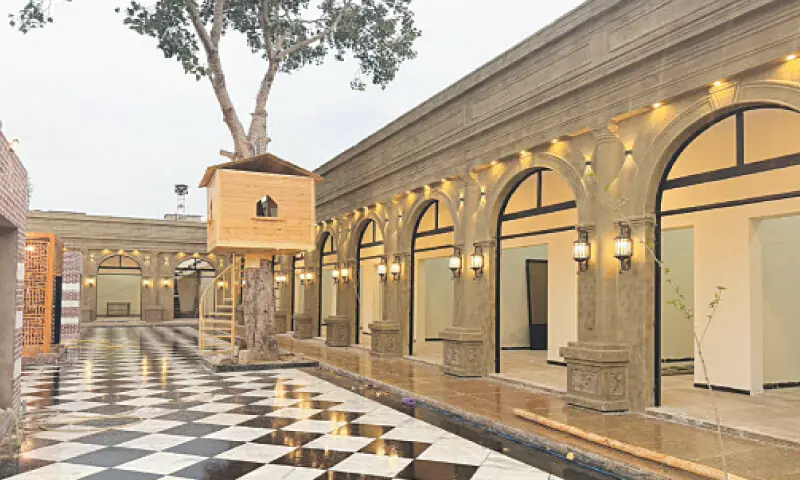

TAXILA: In a remarkable confluence of heritage preservation and urban renewal, the century-old “Raees Khana” building—once a fading relic of the colonial past—has been meticulously revived, reclaiming its original grandeur and architectural splendor while transforming into a thriving nucleus of commerce and culture in the city.
Erected in 1908 by the feudal elite of Fatehjang in homage to Queen Victoria, Raees Khana was long regarded as a distinguished emblem of refinement, grace and aristocratic legacy. Its stately corridors and intricate design once echoed with the cadence of a bygone era.
However, the tides of history—particularly in the aftermath of the Partition of India—cast a long shadow over the structure, reducing it to a forlorn and contested ruin. In more recent decades, the site had regrettably descended into notoriety, becoming synonymous with neglect and illicit activity.
Today, in what many describe as a “renaissance of heritage,” the district administration has breathed new life into the edifice, restoring it with painstaking attention to its classical aesthetics while repurposing it into a dynamic, revenue-generating marketplace with an estimated cost of Rs 38 million. Spread across approximately 3.2 canals in the very heart of Attock, the rejuvenated complex now houses around 27 commercial outlets besides a filtration plant, as well as a Gazebo to provide better sitting arrangements for visitors.
Officials revealed that the shops fetched nearly three times the reserve price at auction—an emphatic endorsement of the project’s commercial promise and public appeal. Assistant Commissioner Attock Muhammad Arif Qureshi informed that the initiative has also been lauded for its inclusive vision.
Dedicated spaces have been thoughtfully allocated for women entrepreneurs, complemented by essential facilities including separate washrooms and a secure, welcoming environment—an effort widely appreciated as a progressive stride towards gender empowerment in the local economy. Deputy Director development Zameer Janjua informed that while executing the project, special emphasis was carried out on the architecture of the building, as the same victorian style of construction was adopted while raising the building from its ruins, which was literally turned into drug addicts’ den from the last several decades.
Speaking on the occasion, Deputy Commissioner Rao Atif Raza underscored that the project harmoniously fuses antiquity with modern convenience. Drawing inspiration from the iconic Pak Tea House, the establishment of the “Campbellpure Tea House” within the complex adds a profound cultural dimension. Developed in collaboration with the Pakistan Academy of Letters, the space serves as a sanctuary for literature and history, adorned with evocative paintings, rare artefacts and an array of books chronicling the rich and layered past of Attock.
Adding further vibrancy to the restored precinct, the city’s first-ever Food Street and an elegantly designed rooftop dining area now invite residents and visitors alike to partake in leisurely evenings steeped in heritage yet enlivened by modern amenities. The revival of Raees Khana has elicited widespread admiration from the local community, with citizens hailing the initiative as a “masterstroke of vision and dedication.” Hina Mansab Khan, Founder President, Attock Women Chamber of Commerce and Industry, described the transformation as “nothing short of miraculous,” noting that a once-abandoned and stigmatised space has been reborn as a symbol of civic pride, cultural identity and economic vitality.
Ahmed Ali Saqib, President Campbellpur Literary Society, praised the administration for not merely restoring a structure, but for resurrecting a narrative—one that bridges Attock’s storied past with its aspirations for the future.
He said that the establishment of Campbellpur Tea House in the premises would promote literary and cultural activities in the city. Raja Noor Muhammad Niazmi, urban historian said that the project stands as a compelling testament to the power of adaptive reuse, turning a forsaken monument into a flourishing epicentre of commerce, culture and communal harmony.
Published in Dawn, April 5th, 2026
if you want to get more information about this news then click on below link
More Detail