-

-
-
Loading
Loading

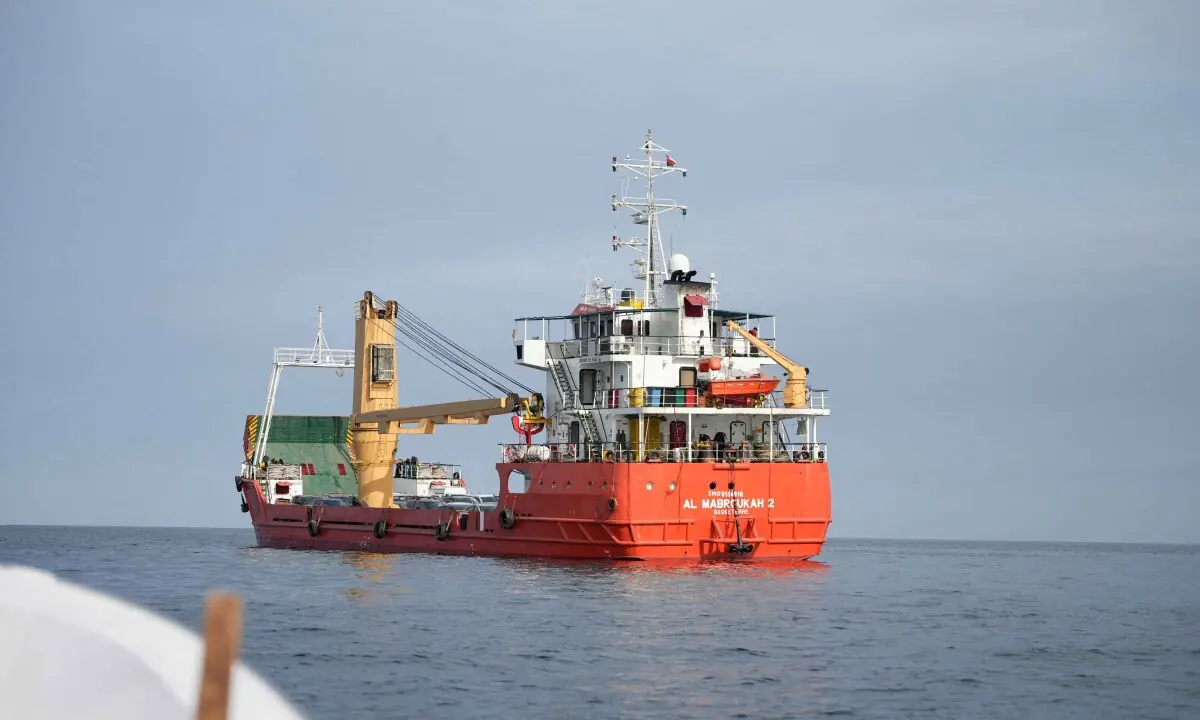

A handful of oil and gas tankers crossed the Strait of Hormuz on Saturday during a brief reopening, tracking data showed, but others retreated and two were reportedly attacked as Iran closed the route again.
The toing and froing over the strait cast doubt on US President Donald Trump’s optimism the day before, that a peace deal to end the US-Israeli war with Iran was “very close”.
Iran reversed its pledge to reopen the strait to commercial traffic during a ceasefire in the war to protest an ongoing US counter-blockade of the route, a crucial passage for commodity shipments.
During the reopening, at least eight oil and gas tankers crossed the strait early on Saturday after the Iranian announcement on Friday afternoon, data from tracking firm Kpler indicated.
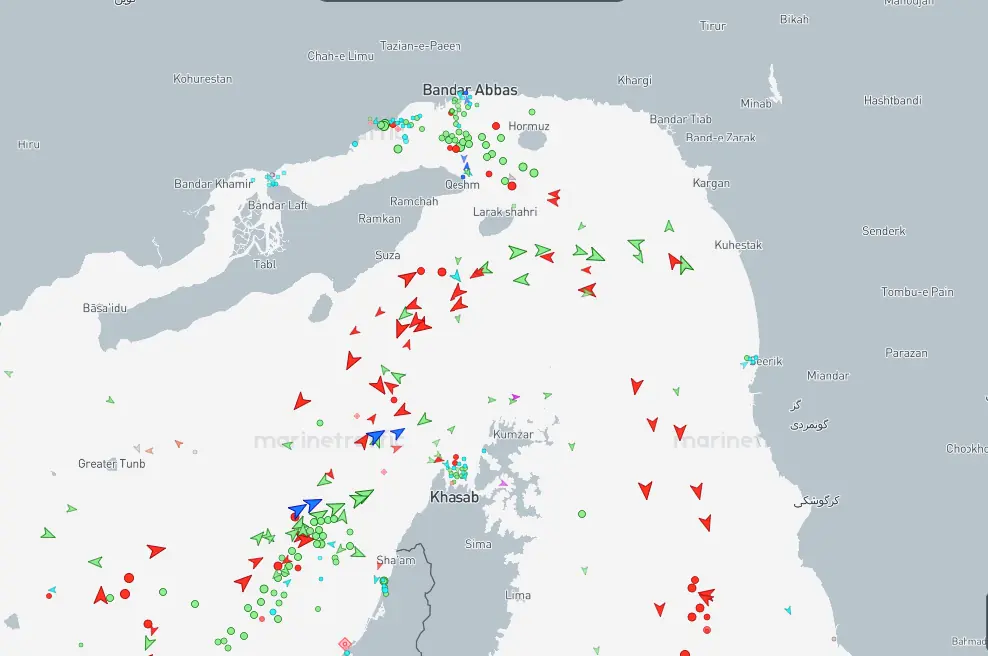
However, tracking platform MarineTraffic showed several other crude oil tankers approached the strait but then turned back near Iran’s Larak Island, a checkpoint for vessels seeking to exit the Gulf under Iranian forces’ blockade of the passage.
Gunboats of Iran’s Revolutionary Guards Corps (IRGC) fired on a tanker in the strait northeast of Oman, the UK Maritime Trade Operations Centre (UKMTO) said in an online statement.
“Tanker and crew are reported safe. Authorities are investigating.”
The UKMTO said later that it also received a report of a container ship in the same area “being hit by an unknown projectile which caused damage to some of the containers” but no fire.
At least three of the vessels tracked exiting via the strait on Saturday were listed as being under US sanctions.
Tehran had on Friday declared the strait open after a ceasefire was agreed in Lebanon to halt Israel’s offensive.
However, the US said its naval blockade of Iran’s ports would “remain in full force and effect as it pertains to Iran, only, until such time as our transaction with Iran is 100 [per cent] complete”.
Subsequently, Iran’s parliamentary speaker Mohammad Bagher Ghalibaf said on X, “With the continuation of the blockade, the Strait of Hormuz will not remain open.”
He added that passage through the waterway would require authorisation from Iran.
“What they call a naval blockade will definitely be met with an appropriate response from Iran,” said Iranian foreign ministry spokesman Esmaeil Baqaei, calling the naval blockade “a violation of the ceasefire” it struck with Washington for a fortnight to enable talks.
Then, late on Saturday morning, citing a statement from military central command, Iranian state TV reported that “control of the Strait of Hormuz has returned to its previous status” and “is under strict management and control of the armed forces”, calling the decision a response to a continued US blockade.
The announcement came as maritime tracking sites showed several ships making a dash through the narrow waterway, hugging close to Iranian territorial waters as instructed by Tehran and, for some, broadcasting their identity as Indian or Chinese in an apparent attempt to show their neutrality.
By 10:30am GMT on Saturday, no fewer than eight oil and gas tankers had crossed the strait, but at least as many ships appeared to have turned back having begun to exit the Gulf.
Iranian forces’ closure of the strait has trapped hundreds of ships in the Gulf and driven up the price of oil and the costs of shipping goods, with captains avoiding the region for fear of attacks or mines.
The shipping industry had reacted guardedly to the reopening on Friday.
“The status of mine threats in (Iran’s maritime) traffic separation scheme is unclear,” Jakob Larsen, chief security officer of major shipping association BIMCO, said in a statement emailed to AFP.
“BIMCO believes shipping companies should consider avoiding the area.”
MarineTraffic indicated that a cruise ship, the Celestyal Discovery, became the first passenger vessel to transit the strait since the start of the conflict.
It crossed close to the coast of Oman on Friday afternoon after having been docked for about 47 days in the United Arab Emirates.
“Reports indicate the vessel is sailing without passengers,” Marine Traffic said in a post on X.
At least two other passenger ships showed up on the tracking platform passing the strait close to Oman on Saturday.
Shipping analysis firm AXSMarine estimated in a note on Saturday that there were currently about 108 to 116 million barrels of crude oil held on vessels at sea in the Gulf.
It estimated that the load could transit the strait within six to eight days following a full reopening, but shipments would take several weeks to reach key markets in Asia.
There are just four days remaining before the end of the two-week ceasefire in the US-Israeli war on Iran, launched by Washington and its ally on February 28.
Nevertheless, Trump appeared convinced that a deal could be finished shortly. He declared on Friday “GREAT AND BRILLIANT,” and made a series of social media posts praising the talks’ mediator, Pakistan.
On Saturday, he said that he may end the ceasefire with Iran unless a long-term deal to end the war is agreed by Wednesday.
“Maybe I won’t extend it, but the blockade (on Iranian ports) is going to remain,” Trump told reporters on Air Force One on his way back to Washington from Phoenix, Arizona.
“So you have a blockade, and unfortunately, we have to start dropping bombs again.”
Asked about a potential deal, Trump said, “I think it’s going to happen.”
Key differences remain between the demands from the United States and Iran, which earlier failed to reach agreement in talks in Pakistan.
Trump told reporters there were “not going to be tolls” imposed by Iran on ships passing through the Strait of Hormuz — something that the Islamic republic put forward during previous peace deal plans.
In a post on his Truth Social platform, Trump said China’s President Xi Jinping was “very happy” about the global oil chokepoint reopening.
“Our meeting in China will be a special one and, potentially, Historic,” Trump added, referring to a summit planned in Beijing in May.
Trump also insisted that Washington and Tehran would jointly transfer enriched uranium stored in Iran to the United States under the touted plan to end the war, which began on February 28.
Iran’s foreign ministry earlier said its stockpile of uranium would not be transferred “anywhere”.
He also told reporters, obliquely, that he would be holding “a form of a news conference” at around 9am on Saturday morning (6pm PKT) with a mysterious visitor to the White House.
He refused to share the identity of the person arriving, but said that they were “very good, very smart, very caring — a person that cares a lot about the country, and beyond”.
Trump also hedged when asked if the visit was Iran-related, saying: “No. Well, it will be — ultimately everything is about Iran, I guess, it all morphs into Iran.”
He added that “the Iran thing is going well — tomorrow is unrelated,” and that he thought it would be “something very good for our country”.
if you want to get more information about this news then click on below link
More Detail