-

-
-
Loading
Loading

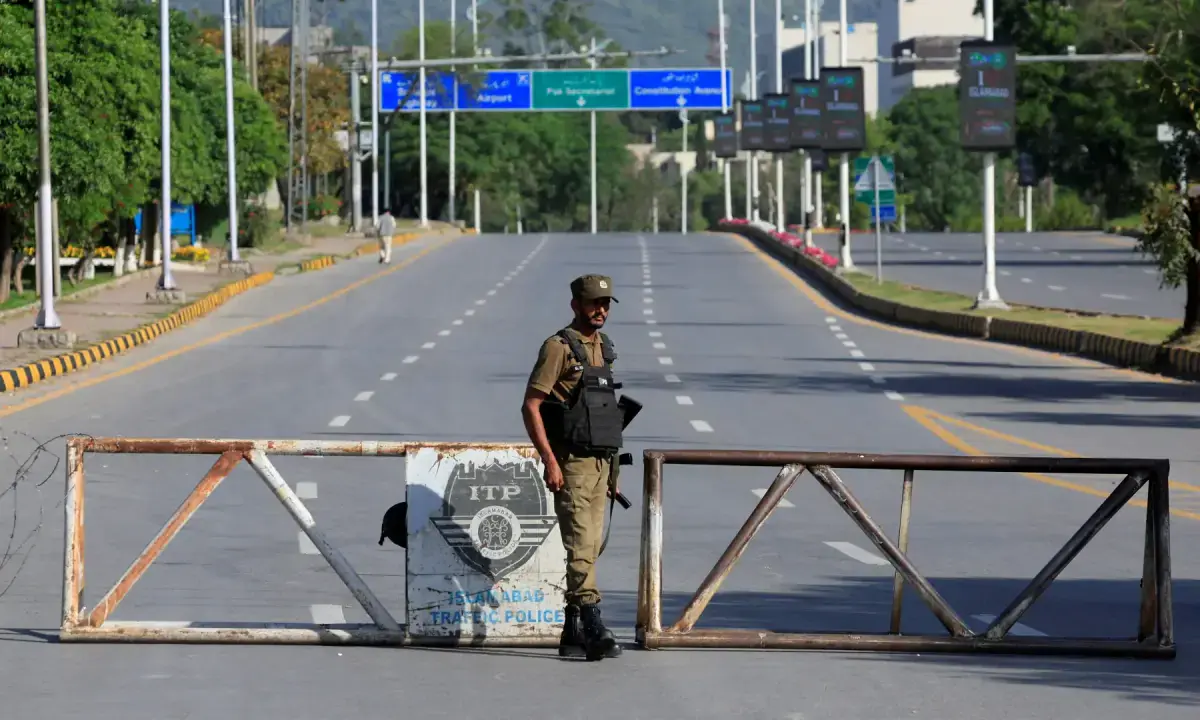

WASHINGTON: As President Donald Trump continues to shift his timeline for ending the war with Iran — from “days” to “weeks,” then “five weeks,” and now simply “soon” — Islamabad remains at the centre of fragile diplomatic expectations for a second round of US–Iran talks.
With the ceasefire under strain and tensions escalating in the Strait of Hormuz, diplomacy is unfolding in parallel with military signalling, economic volatility, and sharply diverging political narratives in Washington and Tehran.
Vice President JD Vance is expected to travel to Islamabad on Tuesday for the next round of talks, but the US media caution that the visit remains contingent on Iran’s confirmation of participation. Preparations are underway in Islamabad for a possible high-level diplomatic engagement, though the situation continues to shift rapidly.
Pakistan remains positioned as host and facilitator, attempting to sustain a process that is still undefined in structure and uncertain in sequencing.
The diplomatic track is unfolding alongside renewed tensions in the Strait of Hormuz, where disruptions to shipping and the seizure of an Iranian-linked vessel by US forces have intensified the confrontation.
Tehran has responded with increased maritime pressure, while Washington insists its blockade will remain in force until a broader agreement is reached.
Energy markets have reacted sharply, with oil prices briefly spiking before easing on expectations that even preliminary talks in Islamabad could still materialise.
Analysts say the absence of a stable diplomatic framework has raised questions about whether a clear endgame was defined at the outset or whether policy is being shaped reactively through public messaging.
Iranian-American scholar Vali Nasr, speaking to Democracy Now, an independent US media outlet, described the current phase as one of “gradual escalation” following the collapse of early diplomatic momentum.
Nasr said early signals of de-escalation — including discussion of a Lebanon ceasefire and limited Iranian openness on maritime access — were reversed after US statements reaffirmed a strict blockade and suggested Iran had already agreed to dismantle its nuclear programme before any formal deal.
He argued that these claims triggered strong anger in Tehran, where officials rejected any suggestion of surrender and accused Washington of misrepresenting negotiations. This breakdown of trust, he said, contributed to renewed maritime confrontation in the Strait of Hormuz and reciprocal military actions at sea.
Nasr warned that growing sentiment within Tehran now questions whether attending talks in Islamabad is meaningful, with some voices arguing that Washington may be preparing for war rather than diplomacy.
Michael Kugelman, a South Asia analyst, has argued that Pakistan’s immediate objective is likely to extend the ceasefire rather than secure a comprehensive breakthrough.
In his view, this approach buys time for more difficult substantive negotiations and reflects Islamabad’s preference for a process-driven strategy rather than an outcome-dependent gamble.
Pakistan, he suggests, is positioning itself for the long game — treating the talks not as an endpoint but as an evolving diplomatic channel amid deep mistrust between Washington and Tehran.
Pakistan’s diplomatic role was also discussed at a seminar at Georgetown University during the Fourth Annual Pakistan–US Conference in Washington on Monday.
Pakistan’s Ambassador Rizwan Saeed Sheikh told the participants that Islamabad’s relevance is not defined only by geography, but also by its historical and future linkages with the Middle East. He argued that Pakistan’s location makes it a potential economic and strategic bridge between China, Central Asia, and the Gulf states.
On the current US–Iran diplomacy, he said Pakistan’s facilitation role should be seen in the context of its broader diplomatic tradition. He said the confidence placed in Pakistan by multiple regional actors reflects its “sincere, humble, and responsible” engagement.
He also highlighted Pakistan’s shift in foreign policy thinking from geopolitics toward geoeconomics, and said disruptions in the Strait of Hormuz had further underlined Pakistan’s geostrategic importance for global trade routes.
Inside Washington, the ceasefire has triggered sharply contrasting political reactions. Democratic lawmakers, many of whom have criticised President Trump’s handling of the conflict, welcomed the pause in hostilities while simultaneously questioning the legality and conduct of US military actions.
Senator Ruben Gallego said on social media that “stopping war is good,” adding that he was relieved that American troops would be out of immediate danger. He also stressed that accountability questions regarding how the war began and whether it was lawful must still be addressed.
Separately, Senators Elizabeth Warren and Chris Van Hollen, among others, have pressed the Pentagon for detailed information on civilian casualties resulting from US strikes inside Iran, signalling growing congressional scrutiny of the administration’s military campaign.
if you want to get more information about this news then click on below link
More Detail