-

-
-
Loading
Loading

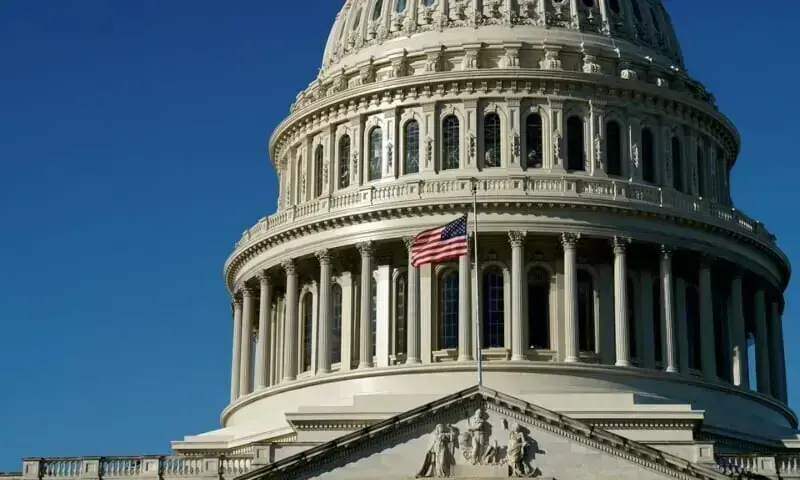

WASHINGTON: An emerging framework for ending the Iran-US conflict has triggered a sharp split among US lawmakers, with Republicans warning of strategic concessions and Democrats divided over diplomacy and enforcement risks.
The proposed arrangement, still unfinalised and subject to approval in Washington and Tehran, reportedly includes steps to restore maritime traffic through the Strait of Hormuz and establish a mechanism for addressing Iran’s stockpile of highly enriched uranium. However, core issues — including long-term enrichment limits, missile capabilities, and sanctions relief — remain unresolved and are expected to be deferred to later rounds of negotiations.
Senator Roger Wicker (R-MS), chairman of the Senate Armed Services Committee, warned that the reported arrangement could undermine recent US and allied military efforts.
“The rumored 60-day ceasefire — with the belief that Iran will ever engage in good faith — would be a disaster,” Wicker said in a post on X. He added that the effects of the joint US–Israel operation, referred to as “Operation Epic Fury,” would “be for naught” if the deal proceeded as described.
Senator Lindsey Graham (R-SC), otherwise a strong supporter of US President Donald Trump, also raised alarm, arguing that an early settlement could shift regional perceptions in Iran’s favour.
“If a deal is struck to end the Iranian conflict because it is believed that the Strait of Hormuz cannot be protected from Iranian terrorism and Iran still possesses the capability to destroy major Gulf oil infrastructure, then Iran will be perceived as being a dominate force requiring a diplomatic solution,” Graham wrote in a post on X.
Senator Thom Tillis (R-NC) criticised the reported diplomatic direction and raised doubts about Iran’s compliance and US policy consistency. “Now we’re talking about a posture where we may accept the nuclear material remaining in Iran? How does that make sense at all?” Tillis told CNN.
He also said it was “questionable” that Iran would end its blockade of the Strait of Hormuz before the terms of the deal were established. He added that Defence Secretary Pete Hegseth had previously told Congress that “they had obliterated Iran’s defenses,” and said there were “a lot of things that need to be explained.”
Former Trump Secretary of State Mike Pompeo, speaking in Sunday commentary, drew comparisons with earlier nuclear negotiations, arguing that interim agreements have historically allowed Iran to gain relief while delaying substantive constraints on its nuclear programme.
Rep. Ro Khanna (D-CA) supported diplomatic engagement and de-escalation. “We would have avoided this war; food prices wouldn’t have gone up, gas prices wouldn’t have gone up,” Khanna said on NBC’s Meet the Press. He added that he supports “a negotiated end to the war.”
Senator Chris Van Hollen (D-MD) struck a cautious, engagement-leaning tone. “When you are digging a hole, you should stop digging,” Van Hollen said in Sunday interview remarks.
Published in Dawn, May 25th, 2026
if you want to get more information about this news then click on below link
More Detail