-

-
-
Loading
Loading

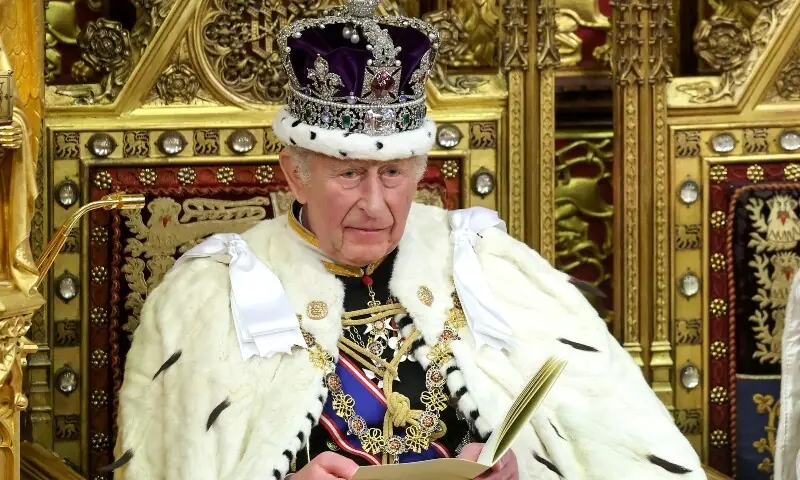

Royal officials said on Thursday that Britain’s King Charles paid $17 million in tax in 2024-25. This is the first time the figure has been made public, placing him among Britain’s top 100 taxpayers.
Officials also said that the king will not live at Buckingham Palace after its 10-year refurbishment finishes next year, ending nearly two centuries of the London landmark serving as the British monarchs primary residence.
Members of the royal family have promised greater transparency about their finances amid growing scrutiny and criticism since the death of Queen Elizabeth in 2022.
Charles’ decision not to live at Buckingham Palace and remain at Clarence House, his longstanding London home nearby, comes ahead of the completion next year of a $487m refurbishment to replace ageing electrical wiring, pipes and heating systems.
When work started in 2017, officials had expected the palaceto remain the monarch’s primary London residence, as it had been since Queen Victoria became sovereign in 1837.
James Chalmers, the king’s treasurer, known as the Keeper of the Privy Purse, said it would remain the primary venue for ceremonial and official functions including hosting state visits.
“It is and will remain ‘monarchy HQ’, the crown jewel of our national buildings, with the sovereigns standard flying proudly from the roof whenever His Majesty is in London,” he told reporters.
Neither Charles nor the late Queen Elizabeth had stayed overnight at the palace since 2019. The king will maintain private rooms there that could be used as accommodation.
Some 700,000 people visit the building every year, and public access will be increased, Chalmers said, without providing details.
By law, the British king is not obliged to pay income, capital gains or inheritance tax, but Charles, has voluntarily done so without disclosing the amounts, as his mother did after 1993.
Charles, like all monarchs since 1399, gets a private income from the vast Duchy of Lancaster estate £25.2m in 2025-26 as well as from his other holdings and investments.
Chalmers said the king had paid £11.7m in tax in 2023-24 and more than £30m in all since becoming king in 2022.
He also receives money from the government, known as the Sovereign Grant, based on a percentage of profits from the Crown Estate, a property portfolio whose revenues the monarch surrenders to state coffers in exchange for an annual payment, to pay for staff, royal palaces and travel.
The grant, boosted by soaring profits from the sale of offshore windfarm licences, rose from £86m in 2024-25 to £132m the following year and will be £137.9m 2026-27.
But Chalmers said it would be cut for the first time in 2027-28, to £100m, “in line with His Majestys clear wishes”, a level where it will stay until 2031-32.
That makes it almost £60m higher than in 2016, when the funding formula was changed to pay for the Buckingham Palace refit. “This is not a blank cheque,” Chalmers said, adding there were safeguards in place to ensure the amount was proportional.
Media revelations in 2024 that the Duchy of Lancaster and heir-to-the-throne Prince William’s Duchy of Cornwall estate were charging Britain’s health service, army and schools rent have generated criticism, as did details this month about royal property arrangements.
William’s office said he had paid £7.76m in tax in 2024-25 and instructed that £1.5m in rent from a closed prison go to the local community.
Critics said the royal finances still remained opaque.
“Another hike for Charles, more spin and gloss and more misdirection on taxes,” said Graham Smith, the chief executive of anti-monarchy campaign group Republic. “This is the way with royal reporting: the more they reveal, the more questions are raised.”
if you want to get more information about this news then click on below link
More Detail