-

-
-
Loading
Loading

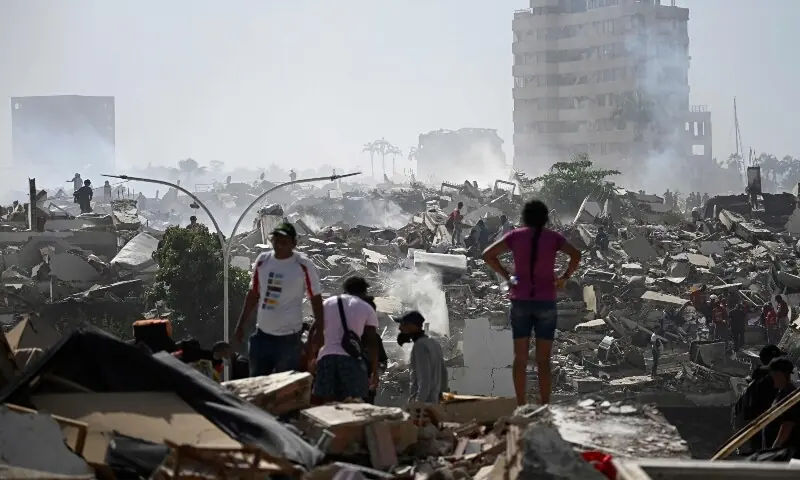

The death toll from two powerful earthquakes that devastated Venezuela earlier this week rose to 920 on Friday, National Assembly President Jorge Rodriguez said.
In a televised address, Rodriguez updated the death toll that had previously been at 589. He also announced a military deployment to one of the worst-hit regions, the state of La Guaira.
More than 50,000 people were missing following the disaster, United Nations aid chief Tom Fletcher told AFP on Friday. “We’ve got over 50,000 people missing, over 500 people dead, so a massive job to go through the rubble,” he said.
Families searched desperately for loved ones trapped under debris, with some of them using their hands to claw at the rubble of buildings.
Foreign rescue teams and aid were arriving in Venezuela nearly two days after devastating twin earthquakes flattened areas in and around the capital Caracas. The government has also confirmed 2,980 injuries till now.
The magnitude 7.2 and 7.5 tremors, two of the biggest earthquakes in Latin America’s modern history, struck about 160 kilometres west of Caracas on Wednesday evening as Venezuelans were enjoying a public holiday.
The US Geological Survey has predicted more than 10,000 deaths.
The government of interim President Delcy Rodriguez, who took power after the United States arrested her predecessor in a January raid, has pledged a massive deployment of assistance.
Yet help was patchy on Thursday, with authorities like firefighters, police, civil protection and the military on the streets in some places but absent or with minimal presence in others.
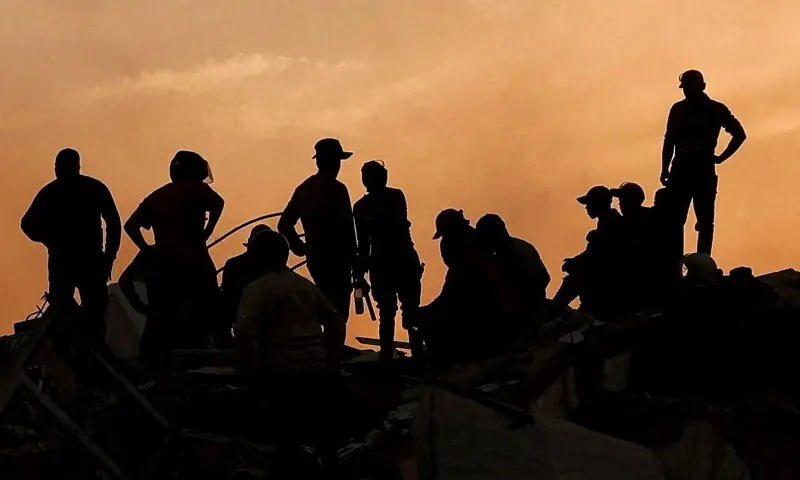
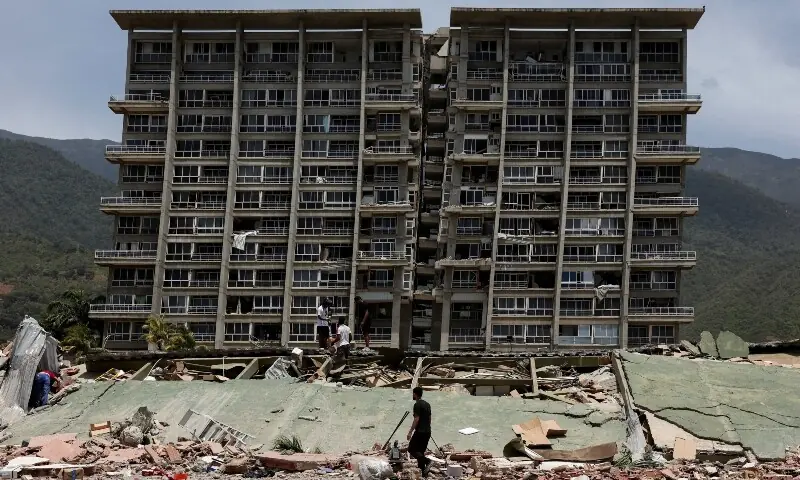
La Guaira, a coastal city just outside Caracas, was the worst affected, as at least 100 buildings, including high-rise apartments, were smashed to the ground.
Anguished residents decried a lack of state help and proper equipment, though state television showed images of Rodriguez making an afternoon visit and pledging aid.
“He’s under the slabs and there’s no machinery to get him out,” said Yamileth Jimenez of her 19-year-old son, who was stuck in debris of their seven-storey apartment building.
Beyond those combing through the rubble, Venezuelans have also stepped up to provide ad-hoc aid to earthquake victims, with motorcycle caravans of supplies reaching La Guaira on Thursday evening from Caracas.
Dozens also travelled by motorcycle through the night from the city of Valencia, carrying food and supplies.
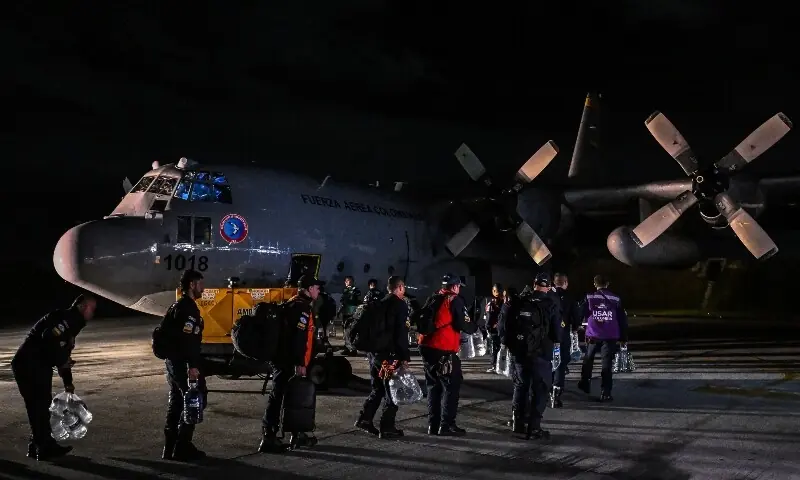
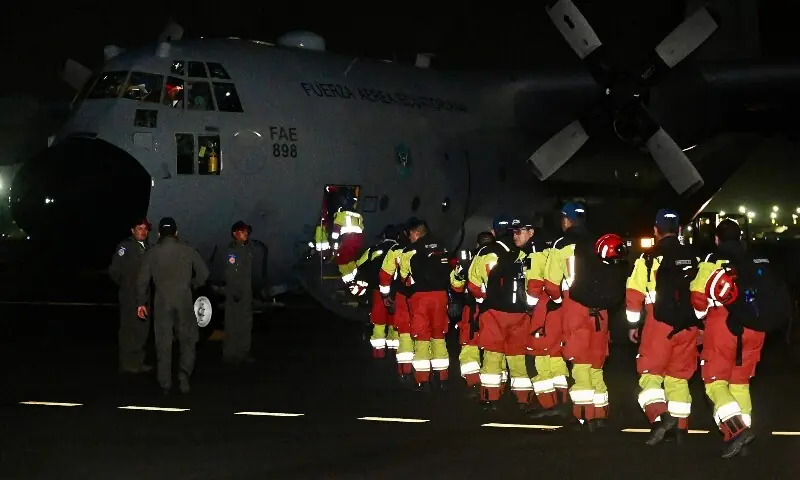
Foreign rescue teams — including some from countries which have opposed Venezuela during decades of international isolation, political repression and economic deterioration — began arriving late on Thursday, with a small contingent from the Dominican Republic the first to reach La Guaira.
Mexico has sent 250 rescuers, El Salvador 188 and Spain nearly 100, and a Colombian air force plane carrying 63 rescue crew was on its way on Friday morning.
Switzerland and Germany have also sent rescue crews and many of the teams bring with them search dogs, sound equipment and specialized gear.
The US has said it is mobilising $150 million in aid, while other countries like Colombia, Switzerland and El Salvador are also sending equipment and supplies.
Washington eased long-time sanctions on the socialist country to allow earthquake aid that would otherwise be prohibited and US Secretary of State Marco Rubio said Washington would send rescue teams and the Pentagon would help support Caracas’ damaged airport.
Rodriguez on Friday morning thanked countries for their support and said foreign teams were distributed among different areas.
The quake hit a nation already weakened by decades of economic and political turmoil that has impoverished residents, triggered a migratory exodus of millions and eroded basic infrastructure and services.
“My building is uninhabitable and now I have nothing. It’s just me and my son, and I have no family in the country,” said Suhayl Sarquiz, 50, who lost her job a few months ago.
Nearly seven million people could be affected, said the UN’s migration body, which was supplying emergency shelter and other relief supplies.
“We lost everything,” said Pedro Perez, 64, an upholstery workshop owner who said he had lost both his home and business and was sleeping on the street on Thursday night with his wife and children.
“We hope help arrives quickly.”
Near the epicenter in Moron, a seaside town in Carabobo state, houses crumpled and residents had no water or electricity.
Families salvaged what they could, including mattresses, televisions and washing machines.
In the vital oil sector of the Organisation of the Petroleum Exporting Countries’ member, foreign energy companies said their operations had not suffered major disruption and oil infrastructure appeared largely spared.
The Caracas Stock Exchange remained closed, turned into an aid collection centre.
Until now, the deadliest quake in Venezuela’s modern history had been in 1967, killing 240 people.
if you want to get more information about this news then click on below link
More Detail