-

-
-
Loading
Loading

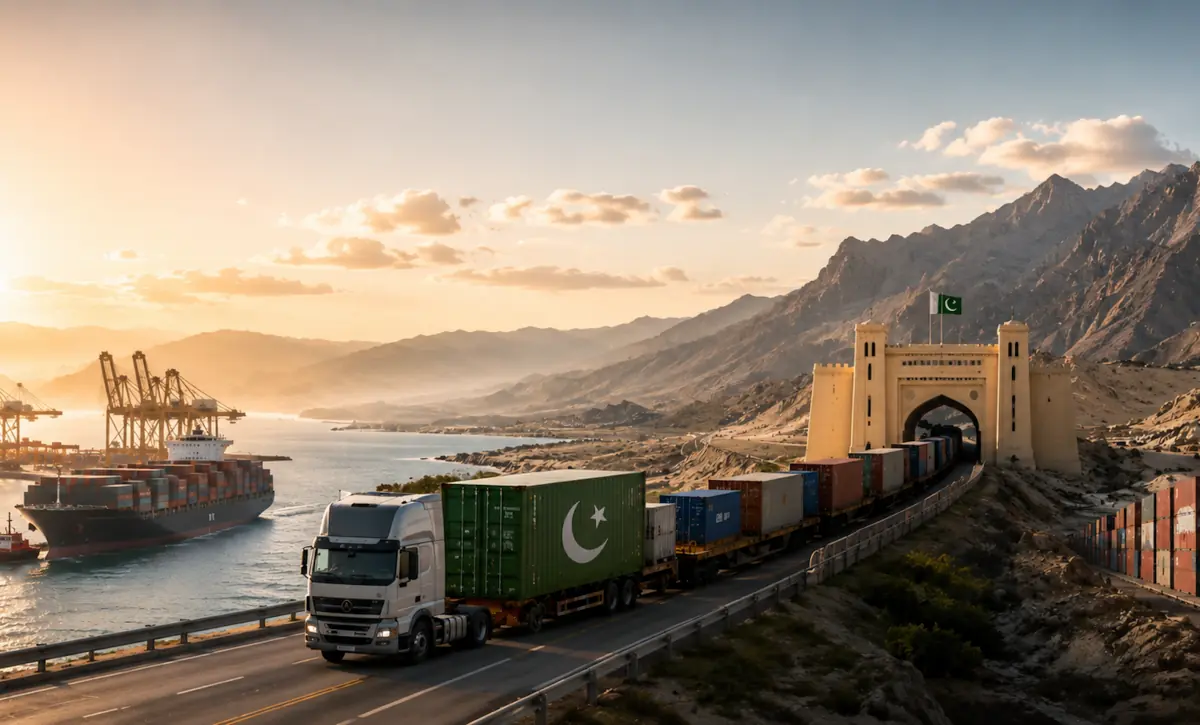

Although Pakistan became an independent state in 1947, the land it occupies has long been a crossroads of civilisations. From Mehrgarh to the Indus Valley Civilisation, this region has linked and integrated South Asia, Central Asia, and the Middle East through trade, culture, and ideas.
That historical role is again shaping Pakistan’s economic thinking as it seeks deeper ties with Afghanistan, Central Asian Republics (CARs), Russia, China, and broader regional connectivity.
At the centre of these efforts is the Pakistan-Russia Business Council (PRBC), operating under the Federation of Pakistan Chambers of Commerce & Industry (FPCCI). With the FPCCI acting as a bridge between the private sector and government institutions, its Council has worked to expand commercial, educational, technological, and investment cooperation between Pakistan and Russia.
Over the last few decades, the PRBC has helped facilitate MoUs with regional chambers of commerce across Russia, encouraging collaboration in trade, technology, education, industrial development, and business facilitation. These initiatives reflect a growing belief in both countries that economic cooperation can become a major pillar of bilateral relations.
Learning from a successful trade model
Supporters of stronger Pakistan-Russia economic ties often point to the successful trading relationship that existed between Pakistan and the Soviet Union from the 1960s through the 1980s. During that period, the two countries developed one of the most comprehensive barter and clearing-based trade arrangements outside the Soviet bloc.
Under this framework, the Soviet Union supplied Pakistan with heavy industrial equipment, steel mills technology, thermal power infrastructure, railway materials, engineering services, agricultural expertise, oil exploration support, and technical assistance that contributed to the development of several strategic national industries. Pakistan, in return, exported commodities including cotton, rice, jute, leather products, chromite, sports goods, surgical instruments, and agricultural produce.
Rather than relying on scarce foreign exchange reserves, transactions were conducted through a combination of direct barter, bilateral clearing accounts maintained by the State Bank of Pakistan and Soviet financial institutions, and long-term supplier credit arrangements. Export proceeds accumulated in rupee-denominated accounts, allowing the Soviet Union to purchase additional Pakistani goods while minimising the need for settlement in convertible currencies. Large industrial projects were financed through concessional Soviet loans that were gradually repaid through exports over many years.
This arrangement enabled Pakistan to industrialise significant sectors of its economy while reducing pressure on its balance of payments, making the model particularly relevant in today’s environment of foreign exchange constraints.
Reviving economic cooperation
Interest in expanding bilateral trade has grown steadily in recent years. In 2023, Pakistan’s Ministry of Commerce approved a barter trade mechanism with Russia following recommendations from the PRBC. Russia’s customs framework also permits similar arrangements, opening opportunities for businesses in both countries to exchange goods without relying exclusively on reserve currencies.
The PRBC has also resolved longstanding obstacles affecting bilateral economic relations. Among its notable achievements has been facilitating the repayment of the remaining Soviet-era debt of approximately US$93.5 million, bringing closure to an issue that had remained unresolved for more than four decades. The Council has additionally supported efforts aimed at removing restrictions affecting Pakistani exports, including agricultural products such as vegetables and grains, thereby helping expand market access for Pakistani businesses.
Building knowledge partnerships
Economic cooperation extends beyond trade alone. Pakistani institutions are increasingly interested in benefiting from Russia’s expertise in science, engineering, agriculture, mining, cybersecurity, medicine, and other STEM disciplines.
The Pakistan-Russia Business Council has advocated stronger academic collaboration through partnerships between Russian and Pakistani universities. In 2023, it facilitated the signing of MoUs between Ural State Pedagogical University, Pakistan’s Ministry of Federal Education and Professional Training, Allama Iqbal Open University, and other educational institutions that provide an initial framework for teacher training, expanding academic exchanges, skill development, joint research programs, faculty collaboration, and specialised educational departments to strengthen Pakistan’s human capital.
The ‘Mir’ trade route vision
Perhaps the most ambitious proposal emerging from recent discussions is the development of the proposed “Mir” Trade Route — an international economic corridor designed to connect Pakistan directly with Tajikistan through Afghanistan’s narrow Wakhan Corridor.
Originally presented by the PRBC in 2017 under the concept of the Russia-Pakistan Economic Corridor (RPEC), the proposal envisions constructing approximately 13 kilometres of ground-level base tunnels through the narrowest section of the Wakhan Corridor. The project has since been shared by PRBC with Pakistan’s Ministry of Communications for preliminary consideration.
The broader vision extends far beyond a single transport corridor. It proposes an integrated network of modern highways, electrified railways, energy transmission infrastructure, oil and gas pipelines, and fibre-optic communications linking Pakistan with Afghanistan, Central Asia, western China, and Russia. If implemented, the corridor could provide the shortest direct overland connection between Central Asia’s resource-rich economies and Pakistan’s warm-water ports on the Arabian Sea.
Regional economic potential
The proposed corridor could significantly reduce transportation costs, transit times, and logistical bottlenecks while creating alternative trade routes across Eurasia. Pakistan could strengthen its role as a regional logistics and transit hub, generating increased port activity, industrial investment, employment, and transit revenues.
Afghanistan could benefit from improved infrastructure and expanded transit services, while the Central Asian Republics would gain more direct access to international maritime trade and the region can obtain an additional land route connecting their economies to South Asian, Middle Eastern, and African markets.
According to estimates cited by Pakistan’s Ministry of Commerce, annual trade potential from the region could eventually approach US$2.7 trillion as regional economies continue to expand and supporting infrastructure matures. Although preliminary investment estimates of approximately US$30 billion are substantial, proponents argue that financing through a consortium of participating countries and international financial institutions could make the project economically viable over the long term.
Challenges and opportunities ahead
Despite its considerable promise, the corridor would face major challenges before becoming reality. Political stability, regional security, environmental sustainability, financing, governance, and cross-border cooperation remain essential. Engineering difficulties linked to high-altitude tunnels and mountainous terrain would also require careful planning and technical expertise.
Experts suggest a phased approach beginning with feasibility studies, environmental assessments, engineering surveys, and confidence-building measures among participating countries. Such a strategy could reduce risks while attracting long-term investment.
The proposed Mir International Economic Corridor, however, represents more than a transport project. It reflects a broader vision of reconnecting regions that have historically shared commercial, cultural, scientific, and educational ties across Eurasia.
Whether the project advances will depend on political commitment, transparent governance, financial cooperation, and regional consensus. If those conditions are met, the corridor could become one of the most significant infrastructure initiatives of the twenty-first century, strengthening trade, improving energy security, and promoting long-term economic integration from Central Asia to the Arabian Sea.
The objective is rooted in the belief that rebuilding historical connections through trade, education, technology, infrastructure, and people-to-people exchanges can contribute to greater regional stability, shared prosperity, and peaceful coexistence across Pakistan, Afghanistan, the Central Asian Republics, Russia, and China. This region of Pakistan can once again link and integrate South Asia, Central Asia, and the Middle East through trade, culture, and ideas.
Header image created with generative AI.
if you want to get more information about this news then click on below link
More Detail