-

-
-
Loading
Loading

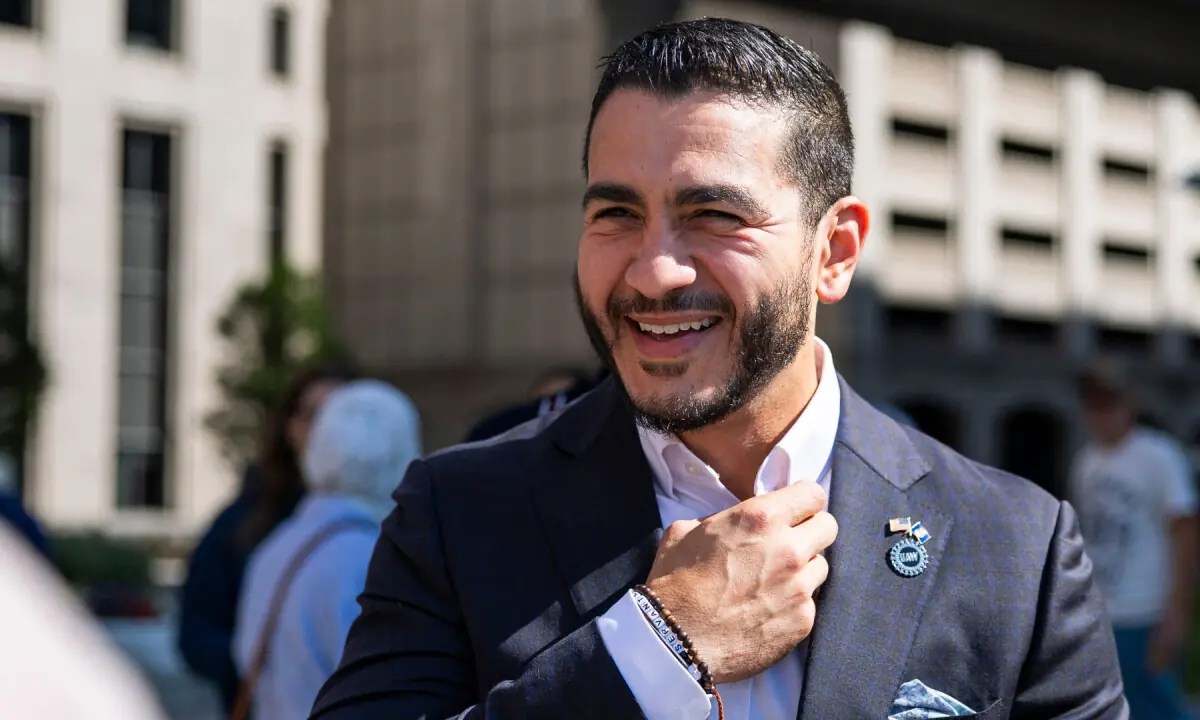

WASHINGTON: Progressive Democrats gained momentum in Tuesday’s primary elections, raising questions about the future direction of the Democratic Party and the impact of these developments on the November midterm elections.
The elections will determine whether President Donald Trump, a Republican conservative, retains the political space to pursue his domestic and foreign policy agenda — including his approach toward Iran — or whether a stronger Democratic presence in Congress forces his administration to moderate its policies.
The biggest signal came from Michigan, where progressive physician Dr Abdul El-Sayed narrowly defeated four-term Congresswoman Haley Stevens in the Democratic Senate primary.
The contest was viewed as the most important test of whether Democratic voters are moving toward a more progressive identity or still prioritising candidates considered more capable of winning in competitive states.
As The New York Times noted, the Michigan race was the Democrats’ “most significant test” of how voters are “weighing questions of ideology and electability.”
El-Sayed’s victory was not an isolated success. Progressive candidates also won important contests elsewhere, including climate activist William Lawrence’s victory in a Michigan House primary.
At the same time, moderate Democrats retained influence by winning several key races, including victories by Representative Marie Gluesenkamp Perez in Washington and Representative Wesley Bell in Missouri.
The scale of the Democratic establishment’s setback was captured by The Atlantic magazine, which described Michigan’s primary result as “an outright catastrophe for the party’s leaders”.
The magazine noted that El-Sayed, who defeated four-term Representative Haley Stevens, had openly challenged the Democratic establishment, criticised the party’s direction and questioned some of its long-standing positions.
Among the issues that separated El-Sayed from the Democratic mainstream was US policy towards Israel and the war in Gaza.
He criticised the party’s approach to the conflict and argued for a significant change in American foreign policy. His position reflected growing frustration among progressive Democrats who believe the party has been too closely aligned with traditional foreign policy positions.
El-Sayed’s victory therefore carried significance beyond Michigan. It represented a challenge from within the Democratic Party over issues of ideology, foreign policy and the meaning of political change in the Trump era. If he wins the general election in November, El-Sayed would become the first Muslim elected to the United States Senate.
As CNN noted, “El-Sayed was outspent in the Senate primary by a 30-to-1 margin on the television airwaves — with about half of the $62 million advertising deluge being funded by the American Israel Public Affairs Committee”, which aimed to defeat a strident critic of Israel’s war in Gaza following Hamas’ October 7, 2023, attacks.
The overall pattern, however, suggested that the progressive wing has gained new momentum inside the Democratic Party. Candidates who argue that Democrats need a sharper economic message and a stronger challenge to Republican policies are increasingly influencing the party’s debate.
The results come at a critical moment for American politics. The 2026 midterm elections will decide control of Congress and determine how much political support Trump has for advancing his priorities at home and abroad.
A Republican victory could strengthen his ability to continue his current course, while Democratic gains could increase pressure on the administration to compromise.
For international observers, the significance of these primaries extends beyond party politics. They offer an early indication of how American voters are responding to Trump’s second term — and whether the opposition Democratic Party is preparing to challenge him from the centre or from the left.
Published in Dawn, August 6th, 2026
if you want to get more information about this news then click on below link
More Detail