-

-
-
Loading
Loading

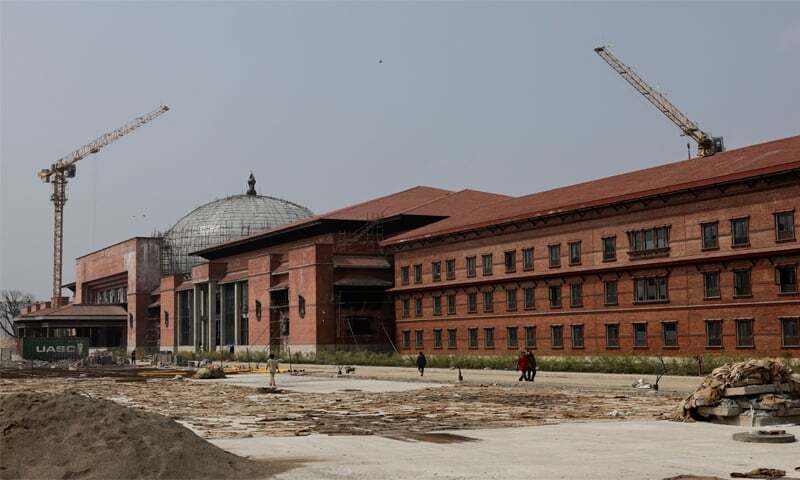

KATHMANDU: Nepal’s rapper-turned-politician Balendra Shah is set to become the next prime minister after his centrist Rastriya Swatantra Party (RSP) won a commanding majority in parliamentary elections.
His meteoric rise, propelled by anti-establishment sentiment and youth anger over corruption, marks one of the most dramatic shifts in Nepal’s political landscape in decades.
The high-stakes March 5 election came six months after deadly protests that toppled the government, in which 77 people were killed.
Just 35, Shah rose from mayor of the capital Kathmandu to defeat veteran four-time prime minister KP Sharma Oli in his own constituency.
But the new government now faces the far harder task of fixing the Himalayan nation’s ailing economy.
Keeping promises
Shah faces the difficult transition from disruptive political outsider to governing leader.
“A serious challenge for the RSP is implementing the promises it has made in its manifesto, given the country’s limited resources, infrastructure, and policy capacity,” political analyst Krishna Khanal said.
“Now the party cannot blame anyone, because it has a majority government. From the day it forms the government, it must go into action.”
BMI analysts, of Fitch Solutions, said the new ruling party “with limited legislative and administrative experience, must navigate deep structural constraints”.
“Shah’s ability to maintain internal cohesion, manage external economic pressures and deliver early wins will help to sustain public confidence,” it added.
“Otherwise, Nepal’s rare short-term political stability will give way to renewed frustration as the gap between political expectation and governing capabilities becomes more apparent.”
Economy
The RSP’s economic plans are ambitious. It aims to create 1.2 million jobs and more than double per capita income to $3,000 within the next five years, while curbing outflows of Nepalis seeking work abroad.
The equivalent of a third of Nepal’s GDP comes from remittances, including from significant numbers of workers in Gulf nations.
They are impacted by the Middle East war, which has also hit landlocked Nepal’s fuel supplies.
Economist Chandra Mani Adhikari said political stability “will raise the morale of foreign investors”, but warned the financial situation may be worse for the new government than the old.
“The resource gap is the same, or has shrunk, and that presents a challenge,” Adhikari said.
Justice and corruption
No one has been held accountable for the 77 people killed during the violence last year.
The interim government will hand over a report into the killing to the new authorities, and analysts warn that failure to deliver meaningful change could quickly erode goodwill.
Aaditya Rawal, shot in the leg during the protests, wants action taken against “those who misused their power and killed innocent people” during the unrest.
“This will give justice to the families who lost their children,” Rawal said.
Published in Dawn, March 14th, 2026
if you want to get more information about this news then click on below link
More Detail