-

-
-
Loading
Loading

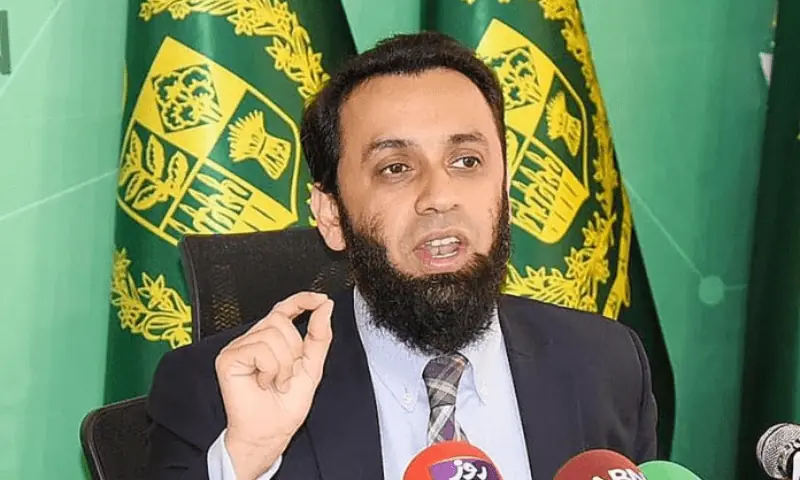

Information Minister Attaullah Tarar on Wednesday said that even a year on, India has failed to provide evidence for its allegations against Pakistan over the Pahalgam attack.
The April 22, 2025 attack in Pahalgam saw 26 people, mostly tourists, killed in what is being described as the deadliest armed attack in the disputed Himalayan region since the year 2000.
“To this day, India has not presented any solid evidence or proof regarding the Pahalgam incident, nor has it offered satisfactory explanations,” Tarar said in a televised statement issued on the incident’s anniversary.
He recalled India’s refusal to accept Pakistan’s offer for a neutral and transparent investigation into the Pahalgam attack, adding that it “raises serious questions and suggests that the incident may have been a false flag operation”.
“The false flag operation in Pahalgam reflects a mindset that is hollow — driven by false pride, arrogance and greed,” he contended.
“Let me make it very clear that this was the last false flag operation that India carried out in Pahalgam […] It will not dare to carry out such false flag operation again,” Tarar asserted.
Stating that the entire matter was “handled through empty slogans and in a very crude manner”, Tarar said Pakistan had been itself a victim of terrorism and had expressed “full sympathy” with the civilians affected in the Pahalgam attack.
The minister questioned how the first information report (FIR) of the case was registered within “10 minutes of the incident” and noted that think tanks had raised questions about there being “no proper security” at the site.
“Furthermore, without evidence, without investigation and without proper inquiry, the blame was immediately placed on Pakistan,” he said, adding that “baseless and fabricated propaganda” becomes very difficult to sell.
“To this day, the world continues to ask questions and India has no answers to give,” the information minister said.
“India’s issue is that it presents its internal matters as external ones and its external matters as internal. A clear example of this is terrorism,” Tarar said.
He added, “Terrorism is India’s internal issue, yet it portrays it as an external problem. Similarly, the Kashmir issue is an international issue but India presents it as an internal one.”
The minister slammed the “ugly face” of Indian media for spreading what he described as propaganda. He asserted that India’s institutions have been “politicised” and suppress minorities.
Tarar highlighted that India had been found involved in transnational terrorism, including the killings of Sikh leaders abroad. “So terrorism is part of India’s state policy and they continue to follow it,” he added.
The minister reiterated Islamabad’s allegations against New Delhi of its involvement in terrorism on Pakistani soil, adding that the country had evidence for it that is periodically shared with the international community.
“In many terrorist incidents, India’s involvement appears here and there, but we are strongly countering them,” he said.
The minister went on to assert, “India should remember that any misadventure of any kind will be met with a firm, decisive and swift response.”
He reiterated the government’s resolve to “take every possible step for the defence of the country”.
He contended that due to its policies, India was “facing global isolation”, while Pakistan was moving forward on its mission of peace.
Just two days after the Pahalgam attack, India took a series of aggressive measures against Pakistan, including unilaterally suspending the critical Indus Waters Treaty (IWT).
Pakistan retaliated by suspending all kinds of trade, closing its airspace for Indian flights and shutting down the Wagah border.
Subsequently, New Delhi launched deadly overnight air strikes on Pakistan on May 6 over allegations about the Pahalgam attack, which Islamabad denied. In retaliation, Pakistan Air Force downed five Indian jets, later raising the tally to seven.
After tit-for-tat strikes on each other’s airbases, it took American intervention on May 10 for both sides to finally reach a ceasefire.
if you want to get more information about this news then click on below link
More Detail