-

-
-
Loading
Loading

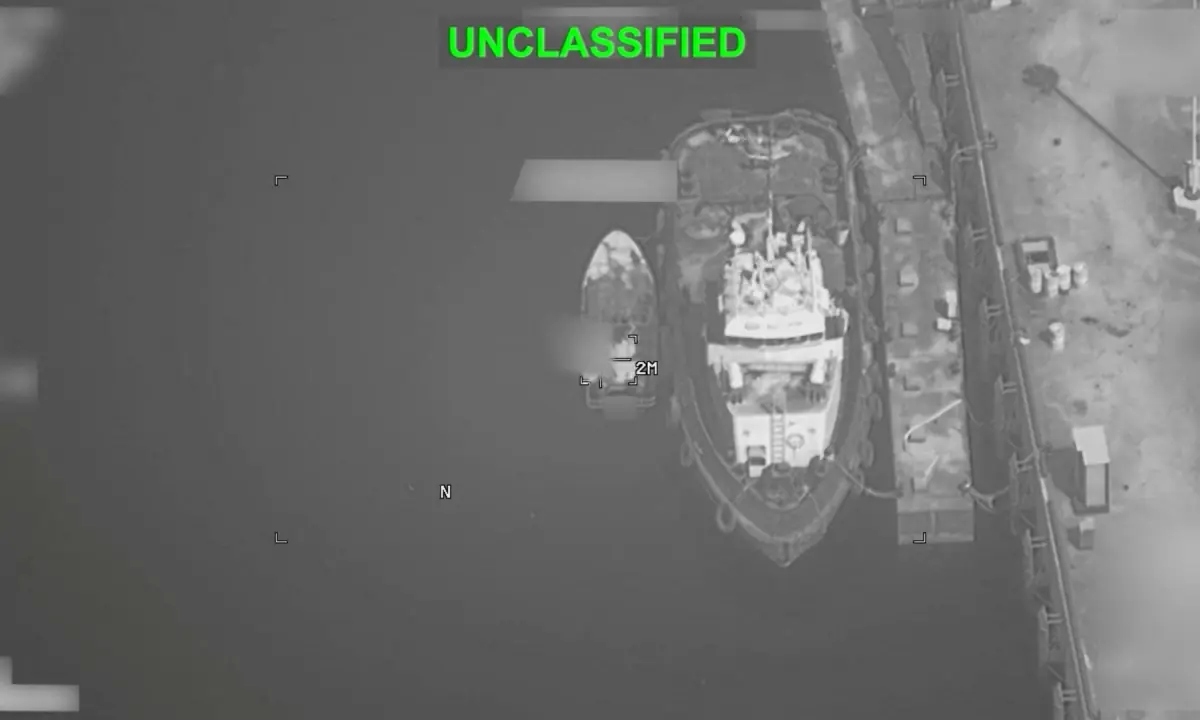

US forces launched a fresh wave of strikes on Iran for the thirteenth consecutive day early on Friday after President Donald Trump vowed “major military punishment” for Tehran and its Houthi allies over attacks on two Saudi oil tankers in the Red Sea by the Yemeni rebels.
The Houthi rebels, who control northern and western Yemen, said this week they were imposing a naval blockade on Saudi Arabia, which has diverted millions of barrels of oil per day by pipeline to the Red Sea to get around Iran’s blockade of Gulf oil through the Strait of Hormuz.
Now, attacks in the Red Sea have extended the Middle East war to a second major shipping chokepoint. Fears that the disruption could widen to block another sea route sent global oil prices surging in one of the steepest rises of the war, which began with US-Israeli attacks on Iran in late February.
Brent crude rose more than six per cent on Thursday, piercing the level of $100 a barrel for the first time since May. Early on Friday, Brent futures eased 72 cents, or 0.72pc, to $99.97 a barrel as of 0126 GMT, but remained on course for a 13.5pc advance this week.
Houthi attacks could close the strait known as the Bab el-Mandeb or “Gate of Tears” which controls access from the Red Sea to the Indian Ocean, the second most important route for energy shipments after the Strait of Hormuz at the mouth of the Gulf.
In the days since they unveiled their blockade in the Red Sea, several tankers have changed course to avoid the Bab el-Mandeb.
Instead, they have headed north through the Suez Canal, potentially using a much longer and more expensive route to reach Asian customers by sailing around Africa.
The number of tankers crossing the Strait of Hormuz fell to just one on Thursday, its lowest since May 7, shiptracking data showed.
Two weeks since the effective collapse of an interim truce meant to end the war, the US military launched air strikes on Iran late on Thursday and early on Friday, for a 13th consecutive night of attacks.
US Central Command (Centcom) said the latest strikes lasted more than two hours.
“Centcom targeted Iranian military command centres, drone storage facilities, communication networks, coastal surveillance sites and maritime capabilities to further diminish the threat Iran poses to civilian mariners and commercial vessels transiting the Strait of Hormuz,” it said in a statement.
On both Thursday and Friday, Iranian state media said missiles struck Qeshm Island on the Strait of Hormuz, the virtually closed waterway that is the focus of a war well into its fifth month that has killed thousands and fanned fears of a global economic downturn.
Four people were killed and five injured in a US missile attack on the Iranian city of Ahvaz, Iranian state broadcaster IRIB said.
On Thursday, Iran said it attacked US missile systems, weapons and fuel storage sites in Jordan, as well as US military posts in Kuwait in retaliatory strikes.
Iran’s Revolutionary Guards said they struck a US electronic warfare unit at Al-Adiri base in Kuwait, causing unspecified casualties, in response to an overnight strike on Iran’s Shalamcheh border crossing with Iraq.
Neither the United States nor Kuwait has reported casualties at the base.
Iranian military spokesperson Brigadier General Mohammad Akraminia said Iran would keep retaliating as long as the US continued to attack its infrastructure and coastal areas, Iranian state TV reported.
Since the US and Israel began the war in February, Iran has demonstrated that it can hit US targets in the region, despite Trump claiming early on that the US had wiped out Iranian military capabilities.
After the Houthis said they had struck the two tankers on Thursday, Trump said he would hold Iran accountable for any further attacks by the fighters.
“If they do this again, the US will hold Iran responsible, in that the Houthis are a surrogate and/or proxy of Iran, and major military punishment will be inflicted upon Iran and, of course, the Houthis, themselves,” Trump wrote on social media.
He told US news website Axios he was considering re-launching major combat operations in Iran and was close to a decision.
“They haven’t received enough pain yet,” the news outlet quoted Trump as saying.
On social media, Trump later said “any and all damages done” to cargo ships would be paid for with “Iranian Money,” referring to frozen Iranian assets held by the United States, but without saying how.
Iranian Foreign Minister Abbas Arachi responded with a warning on X, saying, “Seizing another nation’s assets to pay for unrelated future claims is an incendiary precedent.”
No one’s assets were safe once governments normalised such confiscation, he added on Friday. “Ensuing chaos will not be pretty or peaceful.”
High oil prices are stoking inflation globally, putting Trump’s Republican allies under pressure ahead of congressional elections in November.
The Republican-led US House of Representatives backed legislation on Thursday directing Trump to halt US military action against Iran, for the latest rebuke by Congress, which has the exclusive power to “declare War” under the US Constitution.
Repeated similar resolutions passed in recent months have not led to cessation of the war. The Senate voted hours later to block a separate, similar measure.
if you want to get more information about this news then click on below link
More Detail