-

-
-
Loading
Loading

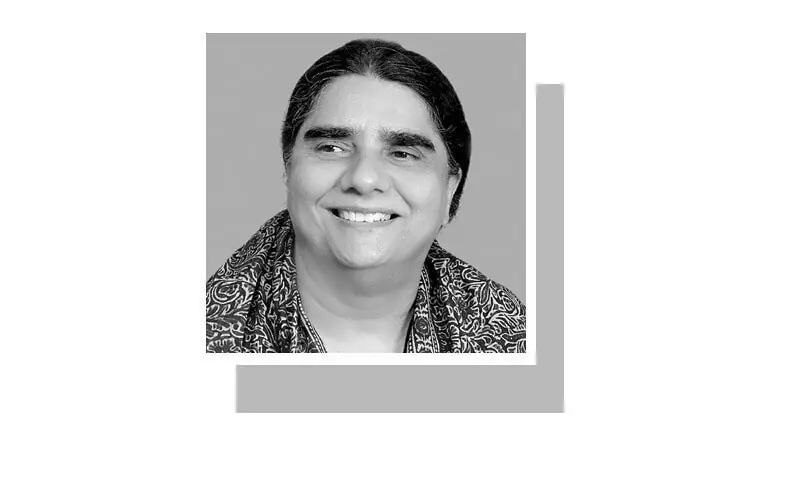

SHE transformed how the world understands soil, farming and the hidden life beneath our feet.Elaine Ingham (1952-2026), one of the most influential voices in rethinking how we grow food, passed away on Feb 16, 2026, at the age of 73. She leaves behind a legacy that extends far beyond science — into farms, fields and the everyday lives of growers across the world.
Dr Ingham challenged dominant agricultural practices that rely heavily on chemical fertilisers, pesticides and intensive tillage. Her work drew attention to soil biology — the complex networks of bacteria, fungi and other microorganisms that support plant health. She consistently argued that disrupting this living system weakens the very foundation of agriculture.
In place of chemical dependency, she advocated approaches centred on restoring soil life through practical, accessible methods. In doing so, she validated long-held ecological wisdom while offering a scientific framework to understand it. Importantly, her ‘soil food web approach’ also made farming more economically viable for growers by reducing dependence on costly external inputs and enabling them to rely on the biological processes within their own soils.
Dr Ingham developed practical, low-cost methods from complex soil microbiology, offering farmers a path out of debt. Through on-farm composting, compost tea and simple soil biology assessment, they can restore soil fertility and reduce reliance on costly external inputs, strengthening self-reliance and long-term resilience.
For countries like ours, Dr Ingham’s work has particular significance.
What set her apart was not only her science, but her method. She broke the notion that science belongs only to laboratories and experts. With a simple microscope — the same tool she had learned to use as a child — she enabled farmers, gardeners and ordinary people to observe their own soils. This shift was profound. It reduced the distance between scientist and farmer, turning passive recipients of advice into active investigators. Growers learned to assess soil biology, understand relationships between organisms and plants and make informed decisions rooted in observation rather than dependence.
Across diverse contexts — from small gardens to large farms — practitioners reported improvements in soil structure, crop resilience and reduced reliance on external inputs. While debates around agricultural systems continue, her work has contributed significantly to a growing global interest in regenerative and agroecological practices. Through the Soil Food Web School, Dr Ingham trained people across continents, building a network of practitioners working with soil ecosystems as “living laboratories”. She gave them not only tools, but language, confidence and a renewed sense of agency.
Her work also holds deep relevance in the context of climate change. Healthy soils, rich in organic matter, can store carbon, improve water retention and enhance resilience to extreme weather. At a time when global agriculture faces unprecedented stress, her insights offer pathways that are both ecological and practical.
For countries like Pakistan, where soil degradation, rising health and environmental costs of chemical inputs, and climate vulnerability pose serious challenges, her work carries particular significance. Rebuilding soil health is not only an environmental necessity but a strategic policy priority. Approaches that reduce dependence on imported inputs, lower production costs and restore ecological balance can strengthen farmer livelihoods while enhancing national food security. Integrating soil biology into agri-cultural policy, extension systems and research agendas offers a pathway towards climate re-silience, economic sustainability and greater autonomy for growers.
Despite her gl-obal influence, Dr Ingham remained, at heart, a teacher — approachable, clear and quietly persuasive. She did not ask people to accept her ideas unquestioningly; she invited them to observe, to test and to see for themselves. There was something almost childlike in her curiosity — a willingness to look closely at what others overlooked. Like the young girl who once wondered about the hidden life, she spent her life helping others rediscover that same sense of wonder.
If her work leaves us with one enduring lesson, it is this: the smallest and most invisible forms of life hold the greatest power to sustain our world. Her passing marks the loss of a remarkable scientist and educator. But her legacy lives on — in healthier soils, in empowered farmers, and in a growing movement that continues to see the earth not as inert ground, but as a living system.
The responsibility now lies with us — farmers, scientists and policymakers alike — to carry forward this vision.
The writer is an educationist, agroecologist and development activist.
Published in Dawn, April 8th, 2026
if you want to get more information about this news then click on below link
More Detail