-

-
-
Loading
Loading

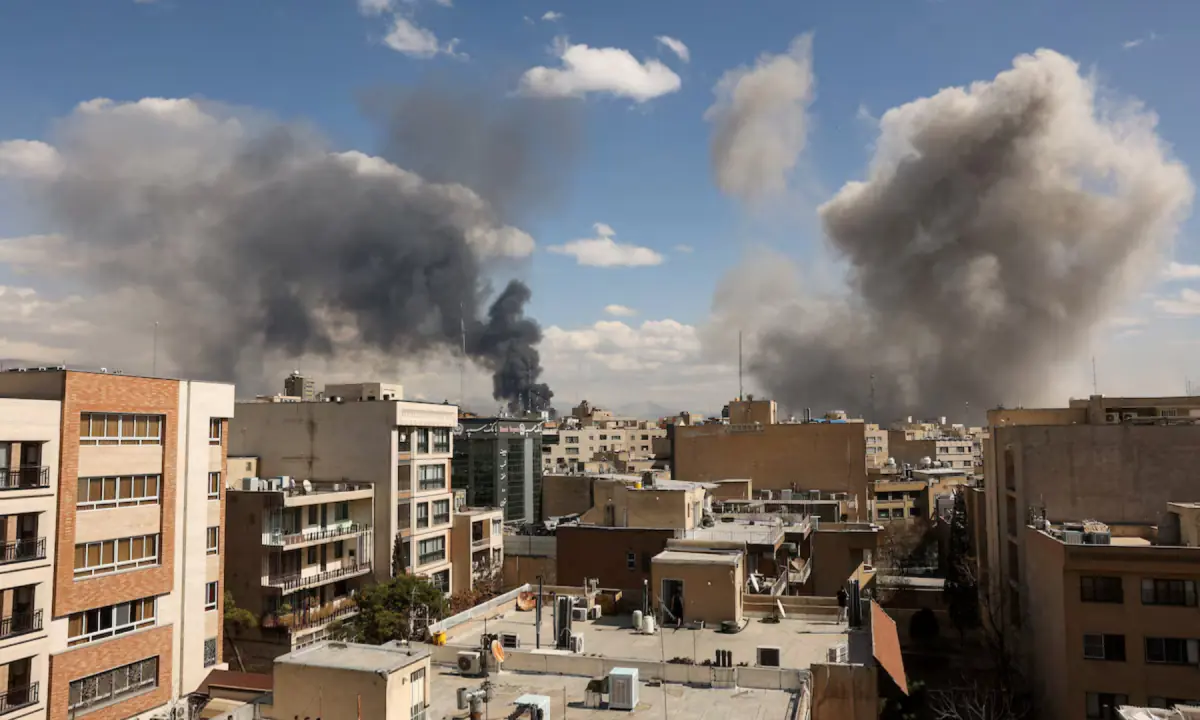

Backchannel diplomatic efforts by Pakistan appear to have finally paid off, as the United States and Iran agreed to a two-week ceasefire after weeks of escalating hostilities triggered by US-Israeli strikes on February 28 that quickly spiralled into a wider regional conflict.
During this time, the crisis has unfolded through a mix of military escalations, retaliatory attacks, and behind-the-scenes negotiations, with failed ceasefire proposals and last-minute mediation all shaping the path to this vital breakthrough.
Here is a timeline of the key events and statements that defined the conflict:
The US and Israel launched an attack on Iran via air and sea: a series of blasts in Tehran, including near the residence of the supreme leader. A US-Israel airstrike on an elementary school in southern Iran killed more than 170 people, most of them schoolgirls.
In retaliation, Iran attacked at least seven Gulf states, striking civilian infrastructure, damaging airports in the UAE and Kuwait, deploying a drone over residential areas in Qatar, and firing ballistic missiles into Jordan, while hitting an apartment building in Bahrain.
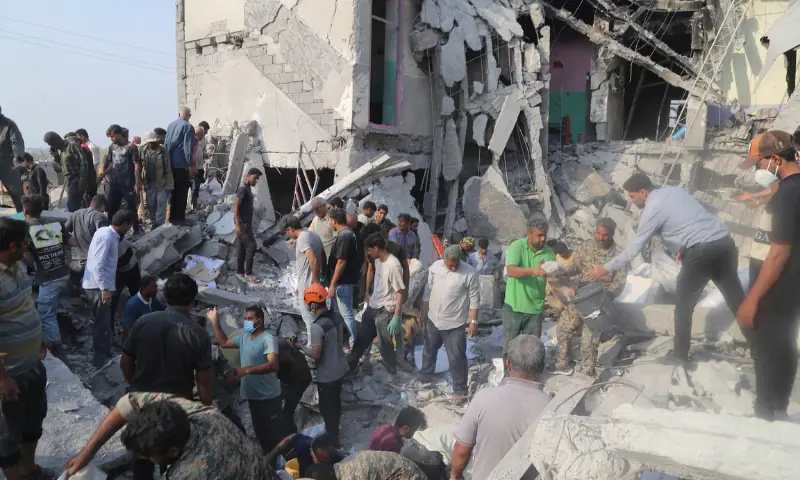
Iran confirmed that Supreme Leader Ayatollah Khamenei, his family members, and other top officials had been killed in Israeli-US strikes a day earlier.
Moreover, 16 people were injured in 11 explosions in Qatar, while one was injured after drone attacks on Oman’s Doqm commercial port.
An Israeli strike damaged the Islamic Republic of Iran Broadcasting complex and the Unesco site Golestan Palace. The total death toll in Iran crossed 700.
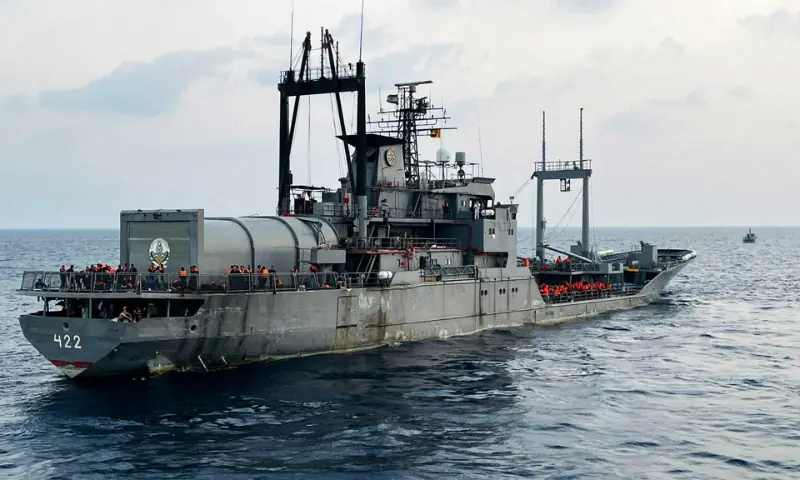
A US submarine torpedoed the Iranian frigate IRIS Dena near Sri Lanka while it was returning from a naval deployment. Iranian authorities said about 80 sailors perished. Iranian Foreign Minister Abbas Araghchi condemned the strike as an atrocity at sea and warned that “the United States will come to bitterly regret the precedent it has set.”
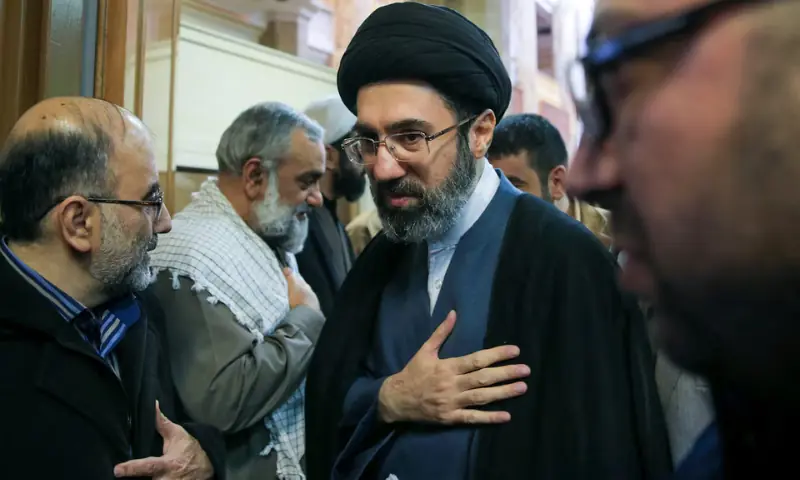
Iran’s Assembly of Experts selected Ayatollah Mojtaba Khamenei as the country’s new supreme leader.
The transition that happened without any disruption signalled both “institutional continuity and a consolidation of authority at a time when Iran remains under sustained military pressure,” according to Dawn correspondent Baqir Sajjad Syed.
Iran announced new missile strikes on Israel, with Israeli news outlets reporting that debris from interceptions fell in three areas.
At this point in the conflict, the maritime domain, particularly the Strait of Hormuz, emerged as the principal flashpoint, shaping both the military trajectory of the war and the strategic calculations of the US as the contest over oil flows and shipping lanes began to define the central logic of the conflict.
In the preceding 24 hours, at least three separate attacks were recorded against commercial vessels operating in or near the Strait of Hormuz, reinforcing the perception that Iran had begun enforcing its threat to disrupt maritime traffic through direct kinetic pressure.
The United Nations said up to 3.2 million people in Iran had been displaced since the start of the war. According to Tehran, the US and Israel had been carpet bombing civilian infrastructure, including hospitals, oil depots, and energy infrastructure.
Meanwhile, Iran continued its retaliatory attacks on Gulf countries, with several drones shot down in Saudi Arabia as well as reports of attacks on fuel tanks at Oman’s Salalah port and Bahrain.
A US air refueller was downed over western Iraq while conducting aerial refuelling operations.
It was the first-ever incident of any air force refueller being shot down. Iranian-aligned militias in Iraq claimed the attack in which all four crew members on board were killed, while another tanker was said to have been damaged in the same attack and forced to divert.
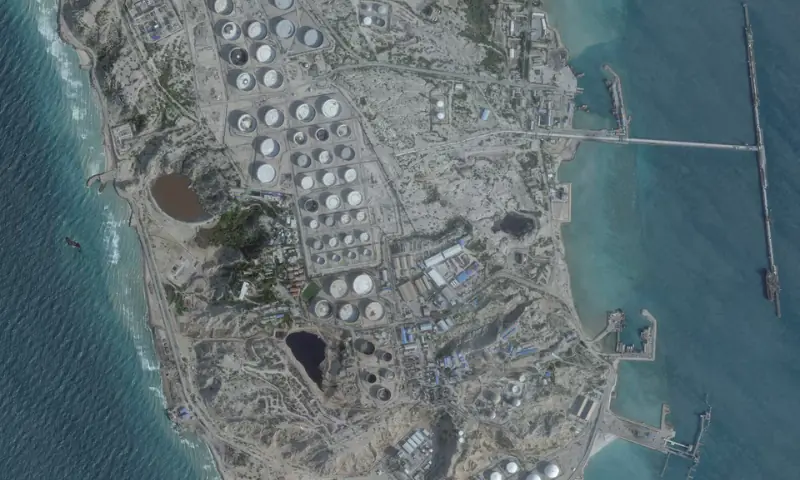
American forces struck Kharg Island, Iran’s principal oil export hub, while Tehran and its regional allies increased pressure across multiple theatres stretching from the Gulf to Iraq and Lebanon.
US aircraft conducted strikes on Kharg Island on the night of March 13, targeting what Washington described as military facilities associated with the Islamic Revolutionary Guard Corps Navy.
Meanwhile, smoke could be seen rising from two locations around Israel’s commercial hub, Tel Aviv, a journalist with the AFP, after blasts were heard following a warning that missiles were fired from Iran.
Ali Larijani, the head of Iran’s Supreme National Security Council was killed in an Israeli air strike.
After weeks of speculation around whether he was still alive, Israeli Prime Minister Benjamin Netanyahu appeared on television to make the announcement, where he also vowed to hunt down and “neutralise” the new supreme leader, Ayatollah Mojtaba Khamenei.
Iran’s Revolutionary Guards also confirmed the death of Gholamreza Soleimani, head of the Basij paramilitary force, in a US-Israeli air strike.
Across Iran, the Persian New Year arrived without the usual festivities associated with it. Celebrations were scaled down, with war, blackouts and economic strain shaping public sentiment. Markets remained open but subdued, and even among diaspora communities, observances lacked the usual fervour.
Trump threatened to “obliterate” Iran’s power plants if Tehran did not fully reopen the Strait of Hormuz within 48 hours, a significant escalation barely a day after he talked about “winding down” the war.
“If Iran doesn’t fully open, without threat, the Strait of Hormuz, within 48 hours from this exact point in time, the United States of America will hit and obliterate their various power plants, starting with the biggest one first!” Trump said on social media.
Trump said he had given orders to postpone any military strikes against Iranian power plants for five days, hours ahead of a deadline that threatened further escalation in the conflict.
Trump claimed in a post on his Truth Social platform that the US and Iran had had “VERY GOOD AND PRODUCTIVE” conversations over the past two days about a “COMPLETE AND TOTAL RESOLUTION OF HOSTILITIES IN THE MIDDLE EAST”.
Pakistan took centre stage in a coordinated diplomatic push alongside Turkiye and Egypt, as the trio appeared instrumental in securing a five-day pause of US plans to strike Iranian energy and power infrastructure.
At this point, over 82,000 civilian structures had been damaged or destroyed in US-Israeli strikes on Iran.
Deputy Prime Minister and Foreign Minister Ishaq Dar confirmed that “US-Iran indirect talks are taking place through messages being relayed by Pakistan”, adding that a 15-point US framework had been shared and is under Iranian deliberation, while the “brotherly countries of Turkiye and Egypt” were supporting the effort.
Trump decided to extend the “pause” on strikes against Iranian energy infrastructure until April 6, creating the appearance of a diplomatic opening.
However, experts argued it reflected an attempt to buy time amid rising military, economic and political pressures, while keeping escalation options firmly on the table.
DPM Ishaq Dar said that both the US and Iran had expressed confidence in Pakistan to facilitate talks between them amid the Middle East conflict.
He made these remarks in a televised address after a quadrilateral moot on the Middle East crisis. The meeting in Islamabad was also attended by the foreign ministers of Saudi Arabia, Turkiye and Egypt.
After the moot ended, Dar posted on X that he was pleased to welcome the foreign ministers.
Pakistan and China called for an immediate cessation of hostilities and the start of US-Iran talks, as Islamabad and Beijing unveiled a five-point initiative aimed at de-escalation in the Middle East.
The understanding was reached during talks in Beijing between DPM Dar and Chinese FM Wang Yi, held as a follow-up to their telephone conversation on the Iran war a week earlier.
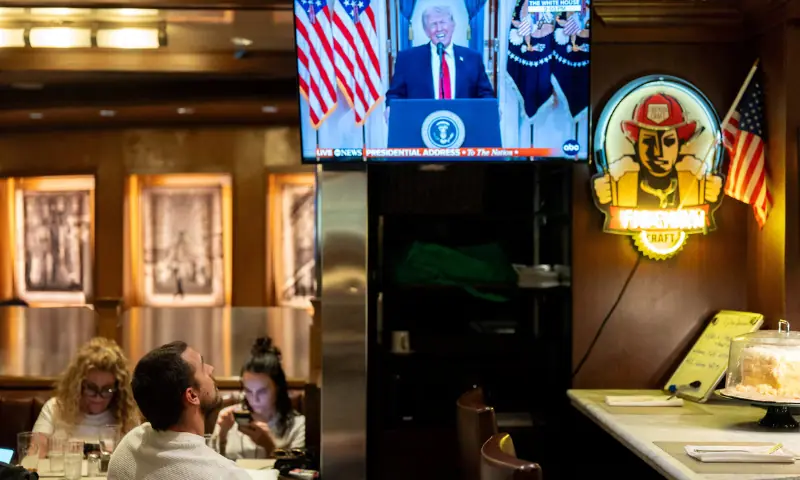
In his 19-minute address from the White House, Trump repeated his claims of severely degrading Iran’s military capabilities.
While he said the US was “getting very close” to finishing the “job” in Iran, he also voiced his determination to bomb the arch-foe “extremely hard” for another two to three weeks.
Iranian FM Araghchi pushed back at reports that Iran was unwilling to travel to Islamabad for future talks with the US, underscoring that Tehran’s position hinged on the terms and conditions of any negotiations.
“Iran’s position is being misrepresented by the US media. We are deeply grateful to Pakistan for its efforts and have never refused to go to Islamabad,” Araghchi said in a post on X.
“What we care about are the terms of a conclusive and lasting END to the illegal war that is imposed on us,” he added.
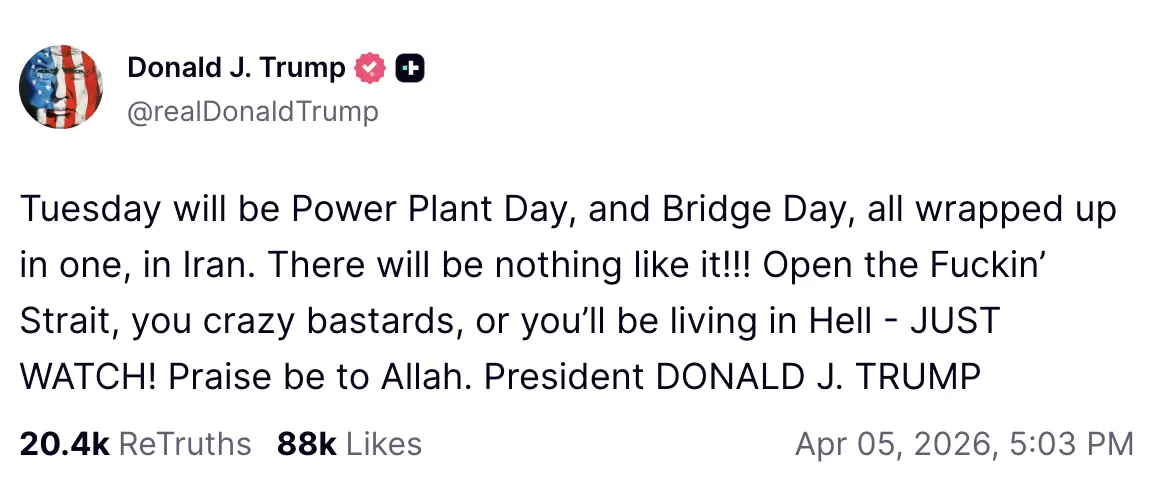
Trump ignited a political firestorm after posting an expletive-laden warning to Iran and threatening further military escalation if Tehran does not reopen the Strait of Hormuz and agree to a deal.
The Israel Broadcasting Authority said that alarms had been activated throughout the country’s north, including the port city of Haifa, after Iranian missiles were fired towards the country.
Trump threatened to entirely decimate Iran in one night after Tehran rejected a ‘ceasefire’ proposal and instead set out demands for returning to negotiations.
He warned that “a whole civilisation will die” in Iran if the country does not heed his ultimatum to accept US war demands.
In a post on Truth Social, he said, “However, now that we have Complete and Total Regime Change, where different, smarter, and less radicalised minds prevail, maybe something revolutionarily wonderful can happen, WHO KNOWS? We will find out tonight, one of the most important moments in the long and complex history of the World.”
Meanwhile, Iran reportedly conveyed a 10-paragraph reply through Pakistan, a key intermediary between Washington and Tehran.
Pakistan announced that Iran and the US, along with their allies, had agreed to an immediate ceasefire, including in Lebanon, effective immediately, and invited their delegations to Islamabad on April 10 for talks aimed at reaching a lasting settlement of disputes.
PM Shehbaz Sharif announced the ceasefire in an early-morning post on X, welcoming the move and extending his “deepest gratitude” to the leadership of both countries.
At this point, the death toll in Iran has reached at least 2,076, with 26,500 wounded. According to Tehran, more than 600 schools and education centres have been hit.
Header image: Smoke rises following an explosion in Tehran, Iran, on March 1. — Reuters
if you want to get more information about this news then click on below link
More Detail