-

-
-
Loading
Loading

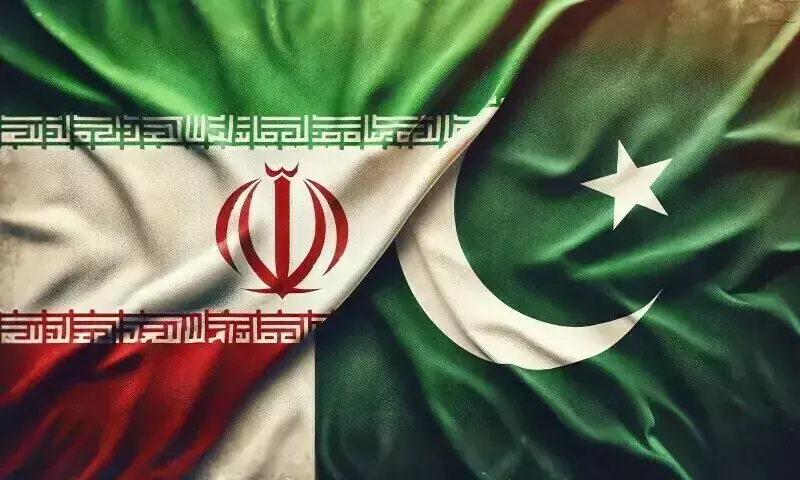

Pakistan has emerged as a key intermediary between Iran and the United States to secure a temporary ceasefire and host negotiations to end the war in the Middle East.
On Wednesday, Prime Minister Shehbaz Sharif said the US and Iran — and their allies — had agreed to a ceasefire “everywhere” following mediation by Islamabad.
PM Shehbaz said the two-week truce — which Washington and Tehran had announced early on Wednesday — would next lead to talks in Islamabad.
The announcements brought a sigh of relief to the world, which had been on its toes as US President Donald Trump’s April 8, 8pm ET deadline (5am PKT) for Iran to reopen the Strait of Hormuz was about to end.
Dawn takes a look at how Islamabad positioned itself as the peacemaker in the war, with its persistent efforts despite moments of dwindling hope of securing calm.
The newly secured hope for sustainable peace is a result of intense diplomatic efforts by Pakistan, which was actively trying to prevent an escalation as tensions had begun building up earlier this year.
The day the conflict sparked, PM Shehbaz and Deputy Prime Minister and Foreign Minister Ishaq Dar began dialing Iranian and Gulf leaders and other regional players, stressing the need for dialogue and de-escalation.
Gulf countries — including Saudi Arabia — faced Iranian attacks, which Tehran said were aimed at US and Israeli-linked sites in retaliation for the latter’s deadly strikes.
PM Shehbaz and his government were quick to keep Saudi Arabia on board, with Dar revealing he had “shuttle communication with both Iranian and Saudi sides” in the war’s first week.
Pakistan and Saudi Arabia signed a “Strategic Mutual Defence Agreement” in September 2025, cementing longstanding ties but also restricting how far Islamabad could go in supporting Tehran.
On March 7, Chief of Defence Forces (CDF) Field Marshal Asim Munir visited Saudi Arabia to discuss Iranian attacks with the Saudi defence minister.
On March 12, PM Shehbaz visited Riyadh for a “restricted meeting” with Crown Prince Mohammed bin Salman.
The same day, the Foreign Office (FO) noted Pakistan was playing the role of a “bridge builder” — indicating that Islamabad was trying to strike a delicate balance and prevent the conflict from expanding further.
Pakistan, along with Saudi Arabia, Turkiye and Egypt, then stepped up their efforts, holding a “coordination” meeting on March 19 on the sidelines of a ministerial meeting hosted by Riyadh.
Then came back-channel diplomacy by Pakistan, Turkiye and Egypt, which were widely reported to have resulted in a pause in US strikes on Iran’s energy infrastructure.
As the momentum built, PM Shehbaz on March 24 offered that Pakistan stood “ready and honoured” to host “meaningful and conclusive talks” between the US and Iran, subject to their concurrence.
The next day, Washington sent a 15-point peace proposal to Tehran, which was conveyed through Pakistan. In response, Iran put forward its own set of five conditions for ending the war.
While Iranian media had initially reported Tehran’s rejection of the US proposal, Dar on March 26 confirmed that “indirect talks” were underway with Pakistan relaying messages.
At this point, the foreign minister of China, which is Iran’s largest trading partner, publicly endorsed Pakistan’s role as a mediator. Trump told AFP that Beijing helped get Iran across the line to the negotiating table.
As peace still seemed far and strikes on Iran’s industries sparked wider retaliation, the group of four that met in Riyadh reconvened to push for reducing tensions.
On March 29, Dar hosted a quadrilateral meeting with counterparts from Saudi Arabia, Turkiye and Egypt in Islamabad for discussions on de-escalation. Following the talks, he signaled that it could host direct talks between the US and Iran in the coming days.
Dar then flew to Beijing for further talks, where China and Pakistan issued a five-point initiative for restoring peace in the Middle East, calling for the immediate cessation of hostilities.
As the war continued into April and Trump maintained his military rhetoric against Iran, some Western outlets began claiming that Pakistan-led peace efforts had reached a “dead end”.
However, Iran’s Foreign Minister Abbas Araghchi was quick to clarify that Tehran’s leadership “never refused to go to Islamabad” for possible peace talks, breathing life into Pakistan’s mediation attempts. At the same time, Iran insisted its position hinged on the terms and conditions of any negotiations.
As per a Dawn report, Pakistan had been relaying messages while building support for talks through parallel engagements with regional and global partners.
The threats of the war prolonging and intensifying escalated on April 5, when Trump, after making an expletive-laden post, issued an unusually precise deadline for Iran.
“Tuesday, 8:00 P.M. Eastern Time,” he wrote, coupled with the warning of bombing Iran’s power plants and bridges on that day, increasing pressure to prevent a worsening situation.
On the day of his deadline, Trump doubled down on his threats against Iran, alarming the world.
“A whole civilisation will die tonight, never to be brought back,” he wrote, prompting backlash from even within his country.
With hours left for the deadline to end, Pakistan publicly requested Trump to “extend the deadline for two weeks”, noting that diplomatic efforts for a peaceful settlement of the ongoing war were “progressing steadily, strongly and powerfully”.
He also requested Iran to open the Strait of Hormuz for a corresponding period of two weeks.
Meanwhile, Dar maintained regional communication, holding four phone calls with the foreign ministers of Morocco, Saudi Arabia, Turkiye and Egypt in a span of around half an hour.
Shortly thereafter, Trump took to his Truth Social platform to say that he had spoken with PM Shehbaz and CDF Munir.
“Subject to the Islamic Republic of Iran agreeing to the COMPLETE, IMMEDIATE, and SAFE OPENING of the Strait of Hormuz, I agree to suspend the bombing and attack of Iran for a period of two weeks,” Trump announced.
Subsequently, Iran’s FM Araghchi shared a statement on behalf of Iran’s Supreme National Security Council declaring that if attacks against the country were halted, it would cease its defensive operations.
“For a period of two weeks, safe passage through the Strait of Hormuz will be possible via coordination with Iran’s armed forces and with due consideration of technical limitations,” he added.
“We received a 10-point proposal from Iran, and believe it is a workable basis on which to negotiate. Almost all of the various points of past contention have been agreed to between the United States and Iran, but a two-week period will allow the Agreement to be finalised and consummated,” Trump said, leaving the door open for future dialogue.
Throughout the conflict, Pakistan leveraged its working relationship with its neighbour Iran, close coordination with Gulf countries, and its recent positive trajectory in ties with the US.
“Pakistan has strong credentials as the only country in the region enjoying good relations with the US and Iran,” said the country’s former ambassador to Tehran, Asif Durrani.
Pakistan shares a 900-kilometre border with Iran, and also deep historical, cultural and religious links. It is also home to the world’s second-largest Shia population after Iran.
Iran was the first country to recognise Pakistan after its independence in 1947. Pakistan returned the favour for the Islamic republic after the 1979 revolution.
Pakistan also represents some Iranian diplomatic interests in Washington, where Tehran has no embassy.
When it comes to the US, Islamabad’s ties with Washington have witnessed major improvement, especially after the Pakistan-India ceasefire in May 2025 that Trump mediated.
Field Marshal Munir has built up a personal rapport with Trump.
CDF Munir visited Washington with PM Shehbaz in September 2025. Pakistan even repeatedly said that Trump deserved a Nobel Peace Prize for stopping its war with India.
On Iran, Trump said Pakistan knows the country “better than most”.
Personal relations have long helped boost bilateral ties shaped by shifting strategic interests that have at times been strained.
At the same time, neutrality makes economic sense for Pakistan, which relies on oil and gas imports through the Strait of Hormuz and wants to avoid getting dragged into another conflict on its doorstep.
Continued disruption would have worsened fuel supplies, driven up prices and forced further austerity measures for the cash-strapped government.
A permanent end to the war would not only boost regional stability but also Pakistan’s international standing.
Additional input by AFP
if you want to get more information about this news then click on below link
More Detail