-

-
-
Loading
Loading

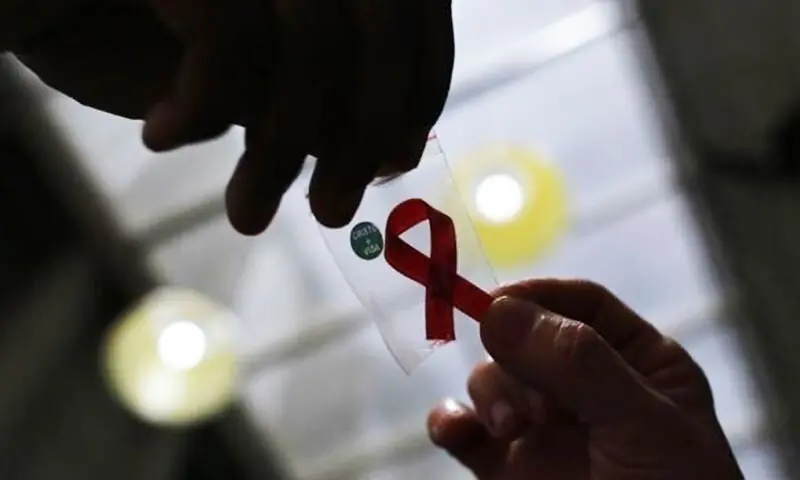

• Health experts say between 2010 and 2024, AIDS-related deaths in Pakistan increased 6.4-fold, rising from 2,200 to 14,000 annually
• New HIV diagnoses in Larkana exceeded 2,000
• Doctors stress need for using disposable syringes
KARACHI: Expressing serious concern over the recurring healthcare-associated disease outbreaks in the country, experts on Saturday called for strict nationwide enforcement of single-use syringe policies and infection control protocols at health facilities.
Against the backdrop of the escalating situation of human immunodeficiency virus (HIV)/ acquired immunodeficiency syndrome (AIDS) and Mpox (formerly known as monkeypox) in Pakistan, the Medical Microbiology and Infectious Diseases Society of Pakistan (MMIDSP) organised a press conference at the Karachi Press Club.
In her remarks, Dr Farheen Ali, associated with the National Institute of Cardiovascular Diseases, said that Pakistan had recently been in the spotlight in both the local and international media due to HIV and mpox outbreaks occurring within healthcare settings.
“This is alarming. Since 2019, we have been seeing multiple HIV outbreaks, many of them were healthcare-associated,” she said, adding that the situation signalled critical gaps in the system.
Dr Samreen Sarfaraz, from the Indus Hospital, said that, unlike several countries where HIV cases had seen a significant decline, Pakistan was seeing a rapid increase.
“A serious health crisis was recently identified in November 2025 among children as young as one year in Karachi, where more than 15 children attending a health facility in the Site town were diagnosed with HIV, with at least two fatalities,” she said, adding that the number of the affected children was still rising as screening efforts continued.
This revelation, she said, could only be the tip of the iceberg, with other public and private facilities providing unsafe healthcare contributing to a hidden, brewing HIV epidemic related to healthcare.
At the Indus Hospital, Dr Sarfaraz shared that 72 HIV positive children less than 15 years had been registered since August, 2025 for care, most of them in advanced disease stages. Of them, 12 had died of HIV complications.
“Only six children contracted HIV from their mothers. Notably, 66 children have HIV-negative mothers. Thirty-seven healthcare-associated cases involved children under two years of age,” she said.
Forty-eight children, she said, had a definite history of high-risk healthcare exposure (e.g., blood transfusions, reused needles, surgeries, hospitalisations), while 18 had unclear exposure histories.
On treatment challenges, Dr Sarfaraz said the country had been seeing a shortage of both antiretroviral and anti-tuberculosis drugs with the suspension of USAID (United States Agency for International Development) funding.
“TB [tuberculosis] is the most common infection affecting HIV patients in Pakistan, a rapidly growing epidemic with a simultaneous shortage in drug supply is a cause of grave concern, and we fear that interruptions in drug supply may lead to spread in drug-resistant cases and endanger lives.”
Explaining the circumstances in which healthcare providers largely operate in the country, Dr Fatima Mir, from the Aga Khan University Hospital, said hospitals were largely understaffed and allocated limited logistics and supplies.
“Contrary to an adult patient requiring the whole (medication) vial, a single vial can be used for five children as their dose needs are smaller, depending on their age,” she said, adding that many doctors and even patients preferred injections over oral medication.
Having said that, she stressed, we must strictly enforce infection control practices.
“We are extremely worried by this situation, which is making the very survival of our children increasingly difficult. The country is already burdened with so many preventable paediatric diseases, including diarrhoea, and we can’t afford to have another challenge. We must act now.”
She also talked about the life-long social stigma that an HIV positive child had to face. “Contrary to what was earlier believed, HIV affects all organs of the body and affects growth and development.”
Summarising the discussion, Dr Naseem Salahuddin, of Indus Hospital, said that Pakistan’s healthcare system — characterised by overuse of injections, weak infection control, and inadequate regulation — creates conditions for the rapid amplification of infections.
The event also saw the launch of a White Paper on HIV in Pakistan.
According to this paper, the HIV landscape in Pakistan has shifted from a concentrated epidemic among high-risk populations to a broader public health crisis characterised by recurring outbreaks in the general population.
Between 2010 and 2024, AIDS-related deaths in Pakistan increased 6.4-fold, rising from 2,200 to 14,000 annually.
Despite this alarming trajectory, the coverage of essential services remains among the lowest in the world; only 21 per cent of people living with HIV have been diagnosed, and only 16pc are on treatment.
A systematic review of reported HIV outbreaks between 2000 and 2019 identified at least seven major outbreaks, with over half occurring between 2016 and 2019.
The primary drivers in the majority of these cases were unsafe medical practices, consistently poor infection control, unregulated blood transfusions, and the use of unsafe injections and needles by untrained or “quack” practitioners.
These outbreaks have affected diverse groups, notably patients requiring chronic care including the 2016 outbreak among renal dialysis patients in Larkana, children and the general population outbreaks in Ratodero (2019), Kot Imrana (2018), and Faisalabad (2019).
Earlier outbreaks include Jalalpur Jattan (Punjab, 2008), where phylogenetic analysis suggested prolonged community transmission through unsafe healthcare practices.
The 2019 outbreak in Ratodero, Larkana, remains one of the largest paediatric HIV outbreaks globally, with over 1,000 cases, the majority of whom were children under the age of 15. Many subsequent outbreaks were reported from Punjab, including an outbreak in a dialysis unit in Multan.
Current estimates indicate that approximately 39pc of people living with HIV in Pakistan now hail from these non-key, low-risk populations.
The transition into the general population is evidenced by several major outbreaks over the last two decades e.g. Jalalpur Jattan (2008), Sargodha and Kot Momin (2018-2019) and Larkana (2016-2019).
The 2019 outbreak in Ratodero serves as a grave reminder of the vulnerability of children within unsafe healthcare systems. In the first two months of the outbreak, 876 new infections were reported, with 82pc occurring among children under 15 years of age.
By the end of 2024, new diagnoses in Larkana reached 2,747, with children still accounting for over half (52pc) of the cases.
It was found that children aged five and under were infected, where 79pc of the cases had non-perinatal transmission, that is, mothers of these children were mostly HIV-negative, effectively ruling out mother-to-child transmission as the primary cause.
Most importantly, nearly 99pc of affected children had received medical injections in the year before diagnosis, and many had histories of frequent therapeutic injections and visits to multiple healthcare providers, including unauthorised practitioners.
Published in Dawn, April 19th, 2026
if you want to get more information about this news then click on below link
More Detail