-

-
-
Loading
Loading

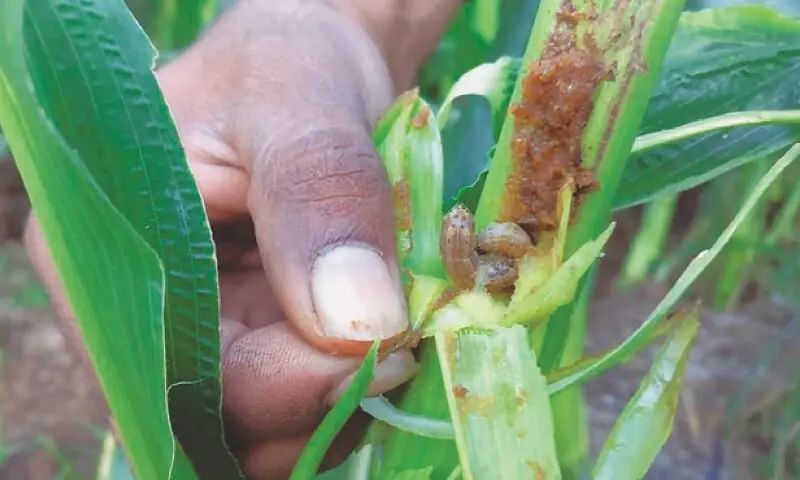

• IAEA’s new initiative aims to boost early detection, monitoring and sustainable management
• Core objective is to boost collaboration among scientists, institutes, plant protection authorities
ISLAMABAD: The International Atomic Energy Agency (IAEA) has announced a new research project that would strengthen global efforts to detect, monitor and manage transboundary crop diseases threatening food security.
“The new coordinated research project (CRP) will support countries in developing and validating technologies that improve surveillance, diagnostics and sustainable disease management. Nuclear and related biotechnologies offer tools to complement existing plant health strategies,” the IAEA said in its latest bulletin.
Advanced imaging and sensor-based technologies, including hyperspectral and near-infrared sensing, enable high-throughput phenotyping of crops. Combined with molecular diagnostics and field-deployable detection tools, these technologies allow researchers to detect diseases earlier and improve plant health surveillance systems.
“Transboundary crop diseases are spreading faster than ever, threatening food security and the livelihoods of millions of farmers worldwide,” the IAEA warned. “Climate variability, expanding international trade and the movement of infected planting materials are accelerating the spread of pathogens across borders,” it added.
Five-year project
To help countries better anticipate and respond to these threats, the agency, through the Joint FAO/IAEA Centre of Nuclear Techniques in Food and Agriculture, has launched a five-year CRP to strengthen plant health preparedness using nuclear and related technologies.
The project, ‘Developing Enabling Technologies for Improved Plant Health Using Nuclear Techniques: Addressing Transboundary Diseases’, will bring together scientists and research institutions from around the world to strengthen early detection, monitoring and sustainable management of transboundary diseases affecting wheat, potato and cassava, the key crops for food security in many regions.
“Diseases such as wheat blast, potato late blight, potato bacterial wilt and cassava witches’ broom disease can spread rapidly, sometimes across regions, affecting large areas. Once established, they can cause severe yield losses and overwhelm national plant protection systems,” the IAEA noted.
“Early detection remains a major challenge. Many infections remain latent, making them difficult to detect before they spread. As global temperatures shift and trade networks expand, the likelihood of diseases spreading rapidly is expected to increase,” it added.
Core objective
“The core objective of the project is to strengthen collaboration among scientists, national research institutes and plant protection authorities worldwide. Through coordinated research, shared protocols and standardised methodologies, participating countries will develop adaptable tools suited to different agri-food systems.”
The project will also support the development of harmonised monitoring systems and plant health networks, facilitating the exchange of reference materials, diagnostic data and best practices. Research coordination meetings will offer opportunities to share progress and build technical capacity in areas such as molecular diagnostics, digital phenotyping and biological control development.
“It aims to strengthen plant health preparedness and resilience by integrating nuclear and related technologies with advanced diagnostics, high-throughput phenotyping and sustainable biological control strategies,” the bulletin stated.
The specific objectives of the project are to develop and validate low-cost diagnostic tools and standardised early-detection protocols for monitoring priority transboundary pathogens. It will harmonise high-throughput phenotyping protocols, including image- and sensor-based methods, to support rapid and reliable disease-resistance screening.
The IAEA said the project would be open to up to 10 research contracts and up to five research agreement holders, offering member states and other interested partners the opportunity to participate.
Published in Dawn, April 19th, 2026
if you want to get more information about this news then click on below link
More Detail