-

-
-
Loading
Loading

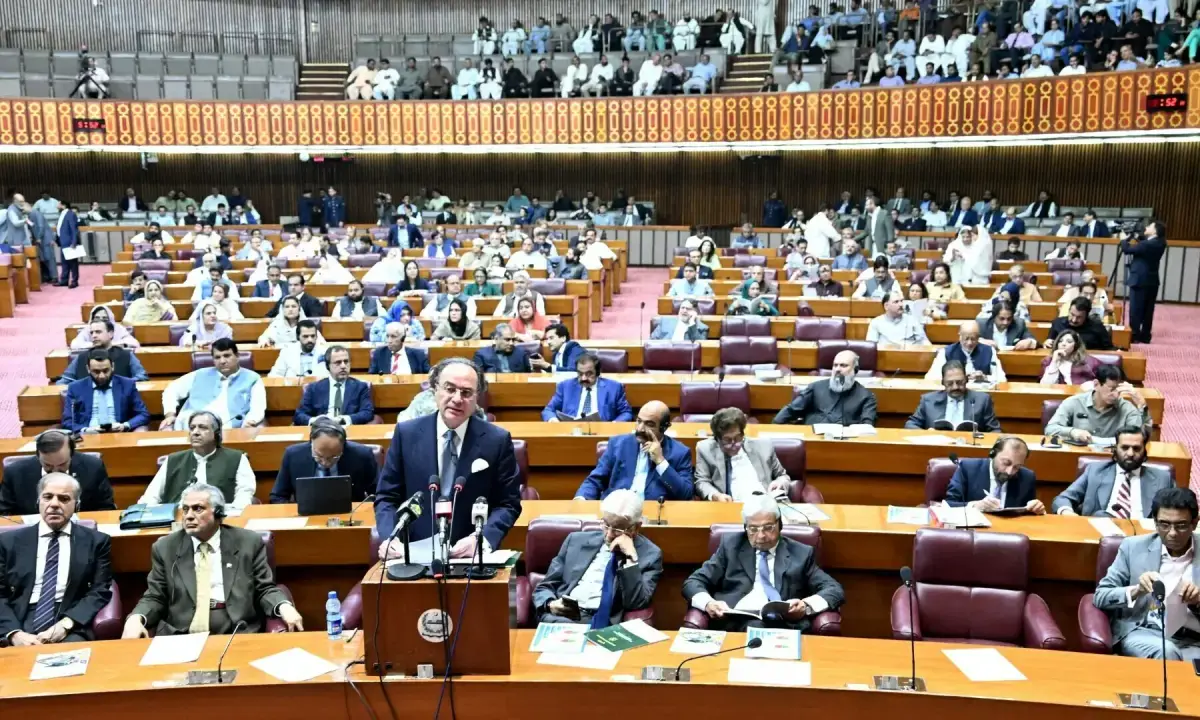

The federal budget for the upcoming fiscal year (FY26-27) is set to be presented in the upper and lower houses of the Parliament today.
Finance Minister Muhammad Aurangzeb was expected to present the financial plan in the National Assembly at 3pm, but the session has yet to begin.
Meanwhile, the federal cabinet approved the budget for the upcoming fiscal year in a meeting held at the Parliament House.
In a post on X ahead of the NA session, PM Shehbaz said the budget has been prepared with “a lot of hard work and sincerity”.
He added that the “welfare and prosperity of Pakistan’s great nation has been given utmost priority”.
The premier also met with a delegation of the Muttahida Qaumi Movement-Pakistan (MQM-P), its coalition, where the two sides had discussions about the budget.
PM Shehbaz termed the MQM-P an “important allied party of the government”, hailing its “positive and constructive role in the development of the country, economic stability, and the completion of the agenda for public welfare”.
The PPP, the main ally of the ruling PML-N, said its chairperson Bilawal Bhutto-Zardari would not attend the budget session, but it also clarified that the party was not boycotting the session.
“Some members will attend the session. The PPP will be a part of the budget process in the national interest,” the party posted on X.
The PPP and PML-N had held multiple rounds of talks ahead of the budget before they settled their issues on matters pertaining to the budget.
In a subsequent post, the party said Deputy Prime Minister and Foreign Minister Ishaq Dar and Law Minister Azam Nazeer Tarar had held a meeting with Bilawal at Parliament.
In the NA today, PPP members, including Shazia Marri, staged a protest before the budget presentation, demanding that the government provide Sindh its due share of water.
“Sindh is facing 48 per cent water shortage,” said a placard held by Shazia Mari. PPP members also surrounded the speaker’s dias for some time before returning to their seats. They raised the slogan “Give us water to drink and live”.
The PPP, which is in the government in Sindh, has been complaining of “unjust reduction” in the province’s water share by the Indus River Systems Authority.
The coalition government is set to unveil fresh tax measures worth Rs660 billion to Rs700bn in the budget, according to a Dawn report.
In contrast to the broader revenue measures, the budget carries highly targeted good news for mid- and upper-level income earners.
Significant relief is planned for salaried individuals earning between Rs230,000 and Rs341,000 a month in the upcoming budget, but a large segment of those making between Rs100,000 and Rs183,000 per month may not see any change, official sources said.
On Wednesday, Aurangzeb said the government would offer special incentives for agricultural productivity and the housing sector in the budget and provide end-user interest rates in single digits for 10 years.
He said a new taxation operating model for retailers and a “faceless” tax system — a digital and centralised system involving no contact between officials and taxpayers — would also be announced in the budget.
PM Shehbaz has said that the government was taking measures to bring the informal economy into the tax net.
The government last week unveiled the ‘Fixed Tax Asaan Scheme’ to bring small traders and shopkeepers into the tax net, with an annual turnover of up to Rs200 million.
It is reportedly also considering relaxing the remittance cap in the upcoming budget, as overseas Pakistanis in several countries have complained of difficulties in protecting their investments and liquid assets abroad.
Until last week, the federal government, its coalition partners and provincial governments had been struggling to reach a consensus over the Centre’s demand for more than Rs1 trillion for strategic needs.
However, the ruling PML-N and its major ally, the PPP, on Monday reached a broad agreement to cut development and other expenditures at all tiers of the federation and jointly create similar, but higher, fiscal space next year for additional “strategic needs”.
The freeze on provincial development programmes, expected to generate more than Rs900bn in additional resources for the Centre’s strategic needs, will continue for a specific period beyond one year, according to the finance minister.
The National Economic Council (NEC), the highest economic decision-making forum of the federation, has set the federal and provincial development budget at Rs3.218 trillion for FY26-27.
It trimmed the federal and provincial uplift plans cleared by the Annual Plan Coordination Committee (APCC) by Rs1.046tr.
Punjab’s development plan was chopped by almost half, or 49pc, the biggest cut among all stakeholders, while Balochistan’s Rs308bn plan remained unaffected.
if you want to get more information about this news then click on below link
More Detail