-

-
-
Loading
Loading

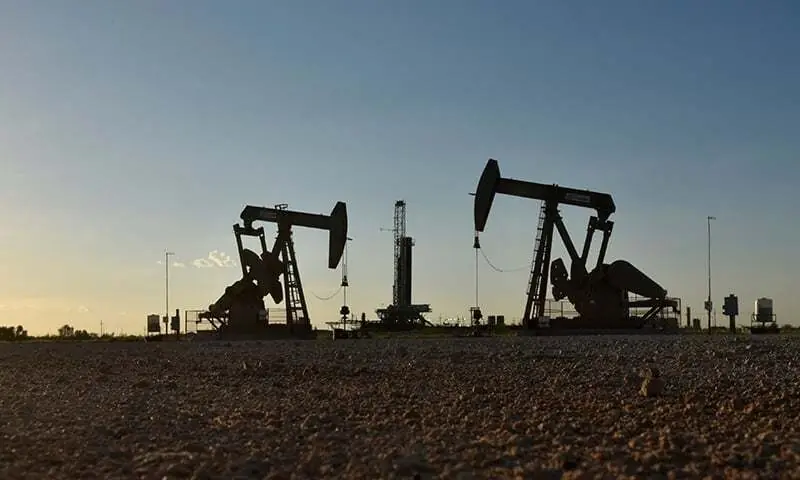

Oil prices rose on Tuesday to their highest in four weeks, as the US reimposed its naval blockade of Iran and as renewed attacks between Washington and Tehran heightened concerns over energy flows through the Strait of Hormuz.
Brent crude rose to its highest since June 12 and US West Texas Intermediate to its highest since June 16 — before the United States and Iran signed a memorandum of understanding to end the conflict on June 18.
Brent crude futures were up $2.89, or 3.47pc, at $86.19 per barrel at 4:58pm PKT, while WTI crude rose $1.53, or 1.96pc, to $79.67 a barrel.
“Despite signing the memorandum of understanding and having a deal, this did not last for even a few weeks. So that’s the concern the market is trying to price right now,” said ANZ analyst Soni Kumari.
“What we think is that the peak of the escalation is behind us, but there are upside risks to oil prices if these disruptions continue and that will keep prices in the $85-$90 range.”
The US military carried out a third consecutive night of strikes against Iran between Monday and Tuesday, as US President Donald Trump reinstated a blockade of Iranian shipping and proposed charging a 20pc fee to guard the Strait of Hormuz.
Amid the strikes, two United Arab Emirates tankers were hit by two Iranian cruise missiles in the southern lane of the Strait of Hormuz in Omani territorial waters, the UAE Ministry of Defence said on Monday. It added that one Indian crew member was killed and eight others were wounded in the strikes.
Shipping data on Monday also showed the number of tankers transiting the Strait of Hormuz fell in the past day to the lowest level in two months.
“The latest escalation, including the US reinstatement of the blockade and Iranian responses, has clearly injected fresh risk into the market,” KCM Trade chief market analyst Tim Waterer said.
“While a full closure hasn’t occurred, the competing objectives of both sides have made the supply picture highly uncertain,” he added.
Citi said in a note that the possibility of the Iranian regime walking away from the MoU until after the US mid-term elections has also risen, a scenario which would most likely see higher-for-longer oil prices.
However, Iran’s oil exports are continuing as usual despite the cancellation last week of a 60-day waiver of US oil sanctions, oil minister Mohsen Paknejad said on his official Telegram account.
Elsewhere, Yemen’s Houthi movement fired missiles at Saudi Arabia after the Yemeni government attacked an international airport in capital Sanaa on Monday.
The Yemeni government said it wanted to prevent an Iranian plane from landing in Sanaa after it failed to convince a Houthi delegation, which went to Tehran for assassinated Iranian supreme leader Ayatollah Khamenei’s funeral, to board a Yemen flag carrier’s flight instead.
“If the Houthis extend their attacks to Saudi’s crude products in the Red Sea, it could put (further) uncertainties on crude flows from the region,” Simon Wong, a portfolio manager at Gabelli Funds, said in a note.
if you want to get more information about this news then click on below link
More Detail