-

-
-
Loading
Loading

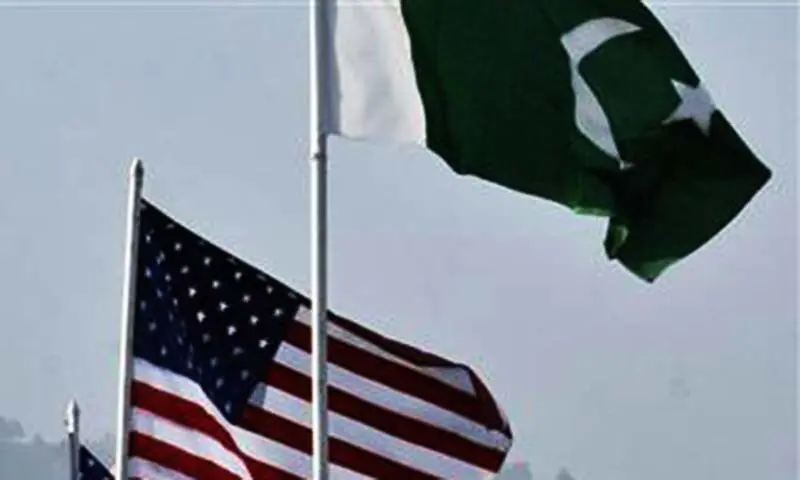

WASHINGTON: As tensions surrounding Iran once again test regional diplomacy, Pakistan is emerging in Washington’s policy conversations as a potential intermediary — a shift that signals a broader reassessment of its strategic utility beyond the traditional security framework.
At an hour-long virtual briefing held on Thursday evening by the Congressional Pakistan Caucus, Congressman Tom Suozzi suggested that Islamabad’s geographic position, demographic weight and cross-regional ties give it space to play a more active mediatory role.
“And we see from this negotiation with Iran right now, and the role that it’s playing, Pakistan can play more and more of a role in international affairs as a mediator,” said Suozzi, the Democratic co-chair of the caucus. He described Pakistan as “a very, very important neutral party, with friends on both sides.”
The remarks come amid renewed diplomatic maneuvering around Iran, where Washington has relied on regional actors to maintain communication channels. Pakistan’s leadership has signaled willingness to facilitate dialogue if both sides desire it.
Suozzi noted that Pakistan has the fifth-largest population in the world and could soon become the largest Muslim-majority nation, which would further enhance its global significance. Demographics, he implied, are translating into diplomatic weight.
Pakistan’s Ambassador to the United States, Rizwan Sheikh, framed the country’s potential role as rooted in its long-standing multi-directional diplomacy.
“Yes, Pakistan actually has been uniquely placed for this role, because we have good terms with the United States. We have good neighbourly relations with Iran, and fraternal ties with the Gulf countries,” the ambassador said.
He added that Pakistan stood ready to assist if both sides sought its help.
“We would only be too honored if we are trusted by both sides to be a facilitator. Ultimately, the decision will have to be taken by the parties, but as a trusted partner, Pakistan will try to facilitate.”
The mediation discussion formed part of a wider conversation about recalibrating US-Pakistan ties beyond a purely security-driven framework. Both speakers acknowledged that while the relationship has experienced periodic strains, it remains strategically consequential.
Suozzi underscored Pakistan’s importance in US foreign policy, citing its nuclear capability, large military and location in what he called “one of the most important regions in the world.” He stressed that stability in Pakistan was critical not only for South Asia but for global security.
Security challenges within Pakistan remain central to this calculus. Ambassador Sheikh noted that Pakistan continues to rank among the countries most affected by terrorism and bears a heavy burden in combating extremist groups. The persistence of cross-border militancy and internal insurgency continues to shape both Pakistan’s domestic priorities and its external partnerships.
Yet Thursday’s discussion also reflected a desire to expand the relationship into economic and commercial domains.
The US lawmaker acknowledged that while many Pakistani Americans and US firms were interested in investing in Pakistan, concerns about security risks, bureaucratic obstacles and political uncertainty often deter potential investors.
He argued that increased trade and investment could help stabilise the relationship and deepen cooperation beyond counterterrorism.
Ambassador Sheikh pointed to Pakistan’s demographic dividend, low production costs and mineral resources as underutilised strengths. He noted that the United States remains Pakistan’s largest export destination and suggested that expanding trade could provide a more sustainable anchor for bilateral ties.
The briefing also addressed concerns raised by Pakistani Americans over delays in US visa processing. Suozzi described the pause affecting immigrant visa decisions as a “bad strategy” and indicated he was discussing the issue with congressional colleagues.
Ambassador Sheikh characterised the pause as a temporary review affecting multiple countries and expressed hope for an early resolution.
On India-Pakistan relations, Suozzi observed that members of the Indian and Pakistani diaspora in the United States coexist peacefully and urged a greater emphasis on shared history and common interests. Ambassador Sheikh reiterated that Pakistan seeks “peace with dignity” in South Asia and remains open to meaningful dialogue.
The tone of the briefing suggested more than routine diplomatic courtesy. At a time when the Middle East is unsettled and great-power competition is reshaping alliances, Washington appears to be reassessing which regional actors can serve as credible intermediaries.
if you want to get more information about this news then click on below link
More Detail