-

-
-
Loading
Loading


HAVANA: A Russian oil tanker under US sanctions is scheduled to arrive in Cuba on Monday, challenging a de facto American fuel blockade of the energy-starved island, shipping data shows.
The Anatoly Kolodkin, which is carrying 730,000 barrels of crude, was north of Haiti on Sunday as it headed towards the port of Matanzas in western Cuba, according to maritime analytics firm Kpler. Cuba lost its main regional ally and oil supplier in January when US forces captured Venezuela’s socialist leader Nicolas Maduro.
US President Donald Trump subsequently threatened to impose tariffs on any country sending oil to Cuba and has mused about “taking” the communist-ruled island.
Jorge Pinon, an expert on Cuba’s energy sector at the University of Texas at Austin, said he was surprised the United States did not try to intercept the Russian tanker before it got so close to Cuba.
Sailboats carrying aid reach crisis-hit country after disappearing at sea
“I think now the chances that the United States will try to stop her have basically disappeared,” Pinon said, though he added that it was difficult to assess what the White House might do.
Once the boat enters Cuban waters, he said, it “is almost impossible for the US government to stop it.”
Urgent need: diesel
The Cuban government says it has not received any oil since January, deepening an energy crisis in the country of 9.6 million people. President Miguel Diaz-Canel imposed emergency measures to conserve fuel, including strict rationing of gasoline.
Fuel prices have soared, public transport has dwindled and some airlines have suspended flights to Cuba, hitting the country’s fragile economy. Cubans have endured regular outages as its aging power plants struggle to meet demand, with seven nationwide blackouts since 2024, including two this month.
The Anatoly Kolodkin, which is under US sanctions, was loaded with oil in the Russian port of Primorsk on March 8. It was escorted by a Russian navy ship across the English Channel, but the two vessels split when the tanker entered the Atlantic, according to the British Royal Navy.
Another ship that was reportedly carrying Russian diesel to Cuba, the Hong Kong-flagged Sea Horse, arrived in Venezuela instead earlier this week. Once the Anatoly Kolodkin’s crude arrives in Cuba, it would take about 15-20 days to process the oil and another 5-10 days to deliver its refined products, Pinon said. “The urgent need today in Cuba is diesel,” the former oil executive said.
The Russian shipment could be converted into 250,000 barrels of diesel, enough to cover the country’s demand for around 12.5 days, according to Pinon.
Pinon said the government would have to decide whether to use the fuel for backup power generators or for the buses, tractors and trains needed to keep the economy going for two weeks.
Humanitarian aid
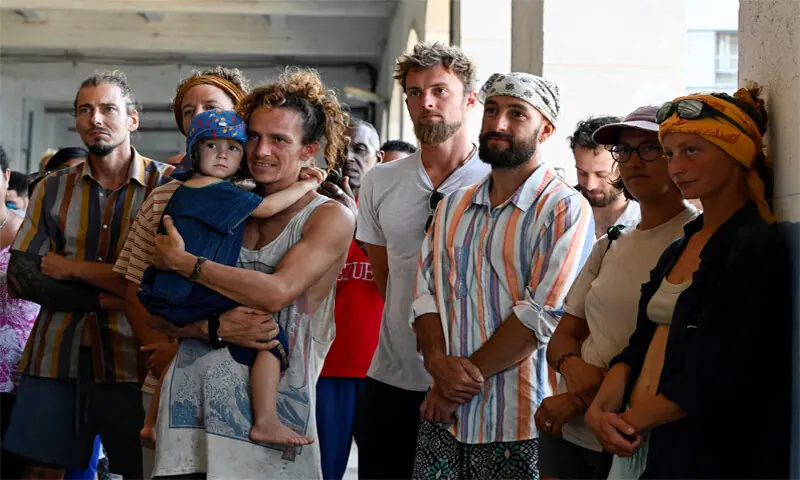
Two sailboats carrying humanitarian aid to crisis-hit Cuba reached Havana on Saturday after disappearing during a longer-than-expected journey from Mexico that triggered a search-and-rescue operation.
The crew of nine — who included American, French and German citizens and a four-year-old boy — appeared in good health and spirits, smiling and giving thumbs-up as they moored in the capital under clear skies.
The vessels delivered the final shipments of Our America Convoy, an international humanitarian effort that has brought aid to support Cuba as a US oil blockade deepens the island’s energy and economic crisis. “We are very sorry to make people worried about us. We were never in any real danger,” Adnaan Stumo, a 33-year-old American and coordinator of the sailing convoy, told reporters.
“It was not a very difficult journey. It’s just a circuitous journey,” Stumo said. The boy, he said, “is a strong, young sailor.” “We’re so happy to bring a crew from so many different countries that are demonstrating solidarity and support for the Cuban people in the face of this criminal blockade,” Stumo said.
The ships were greeted by scores of Cubans, including government officials, chanting “long live the revolution!” and “down with imperialism!” “They scared us a little because we kept wondering, ‘when will they get here?’” Gerardo Hernandez, a former Cuban spy who served time in US prison, told the crowd.
Published in Dawn, March 30th, 2026
if you want to get more information about this news then click on below link
More Detail