-

-
-
Loading
Loading

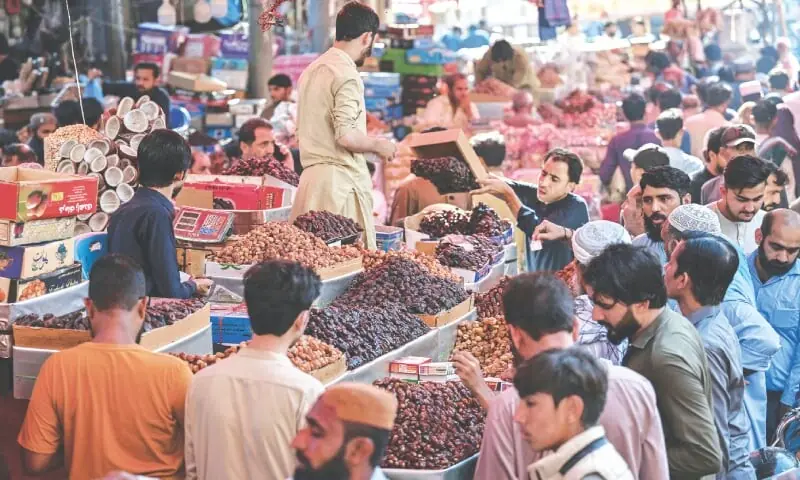

WITH the month of Ramazan almost here, traders are hiking prices of food items in high demand during the fasting month. This is not a new development; it is an annual feature caused by a combination of factors, including the dynamics of supply and demand — some food items are in high demand, while supply remains limited — as well as plain old greed on the part of traders.
The challenge before the state is to ensure that goods of a reasonable quality are sold as per notified rates, and that traders do not get away with price gouging. While high prices affect all segments of society, low-income groups are hit the hardest by Ramazan-related inflation, as they are deprived of a decent iftar spread.
In this regard, the prime minister last week announced a Rs38bn Ramazan package which will be available to over 12m deserving families. Funds will be directly transferred by the state through digital wallets or bank transfer. The prime minister acknowledged that there had been problems with such programmes in past years, such as the substandard quality of items and long queues at utility stores, and hoped these issues would be resolved through digital cash transfers.
As the state wound up utility stores last year, the direct transfer of funds should help people partially tide over inflation during Ramazan. Meanwhile, the quality of goods available at ‘sasta’ and ‘bachat’ bazaars needs to be improved, as oftentimes only foodstuffs of inferior quality are available at these markets. But besides addressing the needs of low-income citizens registered with the state, the administration must also ensure that other categories of consumers are protected.
In the past, owing to exorbitant prices, many consumers would boycott fruit vendors during Ramazan. Already prices have increased in Karachi, while very few vendors are sticking to the official price lists, which the authorities claim have been issued after getting input from market players.
Price lists must reflect the actual situation, while traders who flout official rates and fleece customers should be held to account. Vendors should be able to make a decent return, but this should not mean charging consumers astronomical rates. It is, therefore, important for civic authorities across the country to monitor prices and ensure consumers have access to basic food items at affordable rates during Ramazan.
Published in Dawn, February 18th, 2026
if you want to get more information about this news then click on below link
More Detail