-

-
-
Loading
Loading

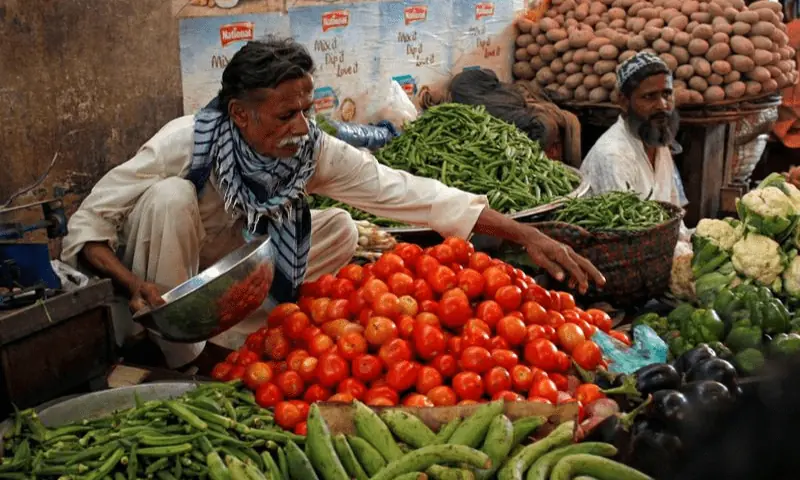

ISLAMABAD: Pakistan’s food import bill surged 15.22 per cent to $7.09 billion in the first nine months of the current fiscal year from $6.15bn in the same period last year, driven mainly by higher purchases of sugar and edible oil.
However, exports of raw food items recorded a steep decline, falling to $3.80bn in 9MFY26 from $5.75bn a year earlier, a contraction of 33.90pc, according to official data.
The drop in exports was broad-based, with volumes declining across nearly all major food categories, except meat, which showed some resilience during the period. Rice exports suffered the most pronounced setback, with both basmati and non-basmati shipments declining significantly in March and over the nine-month period.
Analysts say the widening gap between imports and exports highlights increasing reliance on foreign food supplies, amid weakening domestic output and supply constraints, particularly in pulses.
Sugar, edible oil drive surge
The surge in imports was largely attributed to higher demand for sugar, edible oil and tea, as authorities moved to stabilise local markets and bridge shortages by increasing purchases from international markets.
According to data released by the Pakistan Bureau of Statistics, palm oil accounted for the largest share of imported food items, followed by pulses, tea, soya bean oil and sugar.
Pakistan imported 308,937 tonnes of sugar in9MFY26, marking an unprecedented increase of 11,457.69pc, compared with just 2,673 tonnes in the same period last year.
In value terms, sugar imports surged 6,554.38pc to $174.744 million in 9MFY26 from $2.626m a year earlier after the government’s decision to allow large-scale imports to address domestic shortages and contain rising prices in local markets.
Retail sugar prices have remained volatile, hovering between Rs160 and Rs180 per kg in different cities, prompting authorities to step in and improve supply through imports. Officials say the move was aimed at stabilising the market amid tight domestic availability, as the country increasingly relied on external supplies to meet demand.
The value of palm oil imports rose 17.49pc to $3.023bn during July-March FY26 from $2.573 billion a year ago. In terms of quantity, import of palm oil jumped 12.81pc to 2.809m tonnes in 9MFY26 from 2.490m tonnes a year ago. This growth shows that higher consumption of edible oil and ghee in Pakistan.
However, imports of pulses increased 24.19pc to $624.38m in 9MFY26 compared with $823.63m a year ago.
Imports of soyabean oil fell 56.75pc to $108.68m from $251.28m.
The import bill for all other food items rose 37.77pc to $2.244bn in the 9MFY26 from $1.629bn a year ago. Imports of tea increased 1.95pc to $485.93m from $476.64m.
The import of milk, cream and milk food for infants rose 5.11pc to $105.38m in July-March from $100.26m.
Contrary to imports, exports of major food commodities during July-March FY26 recorded a broad-based decline compared to the same period last year, with basmati rice down 11.82pc and other rice varieties down 47.2pc.
Fish and fish preparations showed a relatively modest increase of 5.99pc, while fruit exports rose by 3.16pc and meat 3.80pc in 9MFY26. Vegetables’ exports plunged 52.71pc, followed by tobacco, which declined by 21.07pc. Spices exports also decreased by 7.91pc during the period.
Published in Dawn, April 19th, 2026
if you want to get more information about this news then click on below link
More Detail