-

-
-
Loading
Loading

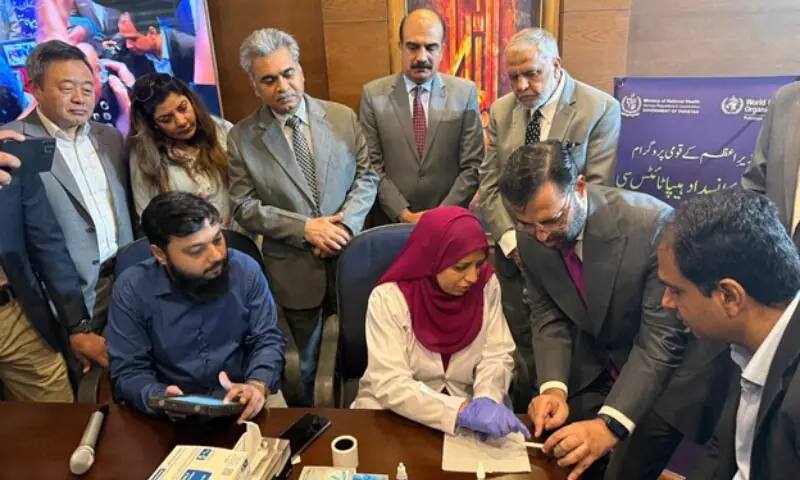

ISLAMABAD: The Ministry of Health and the World Health Organisation (WHO) on Wednesday launched the Prime Minister’s Hepatitis C Elimination Programme, aiming to end the disease by 2030, according to a press release issued by the ministry.
“Pakistan and the WHO today launched the Prime Minister’s Hepatitis C Elimination Programme in Islamabad with the goal of reaching 1.6 million people in the area over the next 6 months, and over 164 million across the country in subsequent phases.”
“The main goal is to eliminate Hepatitis C as a public health threat by 2030, as agreed upon by the World Health Assembly,” the press release said.
Speaking at an event in Islamabad, Federal Health Minister Mustafa Kamal said that Rs67 billion had been allocated to combat one of Pakistan’s most serious public health challenges, the statement said.
“A complete three to six-month treatment course will be provided free of cost under the programme,” the statement quoted Kamal as saying.
He highlighted the alarming burden of hepatitis C, stating that out of nearly 60 million hepatitis patients worldwide, approximately 10 million are in Pakistan.
Kamal further noted that nearly 80 per cent of patients remain unaware of their condition and unknowingly continue to transmit the disease.
“Hepatitis C is a life-threatening disease that can eventually lead to liver cancer if left untreated. Prevention is better than a cure. The true meaning of healthcare is to prevent people from becoming sick,” he remarked, adding that Pakistan’s healthcare system must transition from a “sick-care” model to a genuine healthcare system focused on prevention and early intervention.
He informed that, with the support of the National Database and Registration Authority (Nadra), nationwide screening would be conducted using national database integration to ensure maximum outreach and transparency.
“Initially, 12 Hepatitis C screening counters have been established at federal hospitals in Islamabad for diagnosis and facilitation of patients,” he said.
The minister urged citizens to actively participate in the screening campaign, emphasising that the programme’s success depended heavily on public cooperation.
He announced that the hepatitis C screening test, which typically costs around Rs7,000, along with a complete three- to six-month treatment course, would now be provided free of cost under the programme.
Kamal warned that hepatitis patients may transmit the disease to their family and the surrounding community. He appealed to the public to undergo timely screening before the disease progresses to an irreversible stage.
Speaking at the event, the WHO representative in Pakistan, Dr Luo Dapeng, said, “This programme is a major step towards achieving the 2030 global goal of eliminating hepatitis C as a public health threat. The programme could also avert 850,000 deaths and 1.1 million new infections by 2050.”
“WHO will stand with Pakistan and its people to implement this initiative, following medical science and adapting to the Pakistani context the best practices and lessons learned from around the world.”
“Detecting and treating hepatitis is essential, but prevention is the key to ending the disease, including preventing mother-to-child transmission, safe injections and blood transfusions, and harm reduction,” he added.
اگر آپ اس خبر کے بارے میں مزید معلومات حاصل کرنا چاہتے ہیں تو نیچے دیے گئے لنک پر کلک کریں۔
مزید تفصیل